
🚫 Lost in Translation: 9 Beloved American Foods That Are Banned (or Heavily Side-Eyed) Abroad
Picture this: you’re strolling through a grocery store in Paris, craving a taste of home. You scan the aisles for a box of Froot Loops, a sleeve of Ritz crackers, maybe a comforting little package of Stove Top stuffing. But… nothing. Not a Pop-Tart in sight. Did the French finally decide they’ve had enough of our shenanigans?
Kind of, yeah.
Turns out, a surprising number of grocery store classics that Americans toss into their carts without a second thought are restricted, reformulated, or flat-out banned in other countries. And no, it’s not because Europeans are food snobs (okay, maybe a little). It’s mostly because the European Union operates under a precautionary principle — taking a proactive stance and implementing strict regulations on food and chemicals to safeguard public health even when scientific evidence about potential harm isn’t conclusive. If there’s a hint of risk, the EU will likely ban or heavily restrict the ingredient until its safety can be established.
Meanwhile, the U.S. tends to take more of an innocent-until-proven-guilty approach to additives. So let’s take a tour of the snack aisle through international eyes, shall we?
1. Skittles 🌈 — Tasting the Rainbow, Minus a Few Colors
Skittles are basically edible confetti, and the rest of the world has thoughts.
While the European Union hasn’t banned Skittles entirely, their version doesn’t contain titanium dioxide — a chemical added to foods to enhance whiteness and brightness, which some research shows may be linked to lung cancer.
So European Skittles exist, they’re just… less shiny. Honestly, sounds like a pretty fair trade.

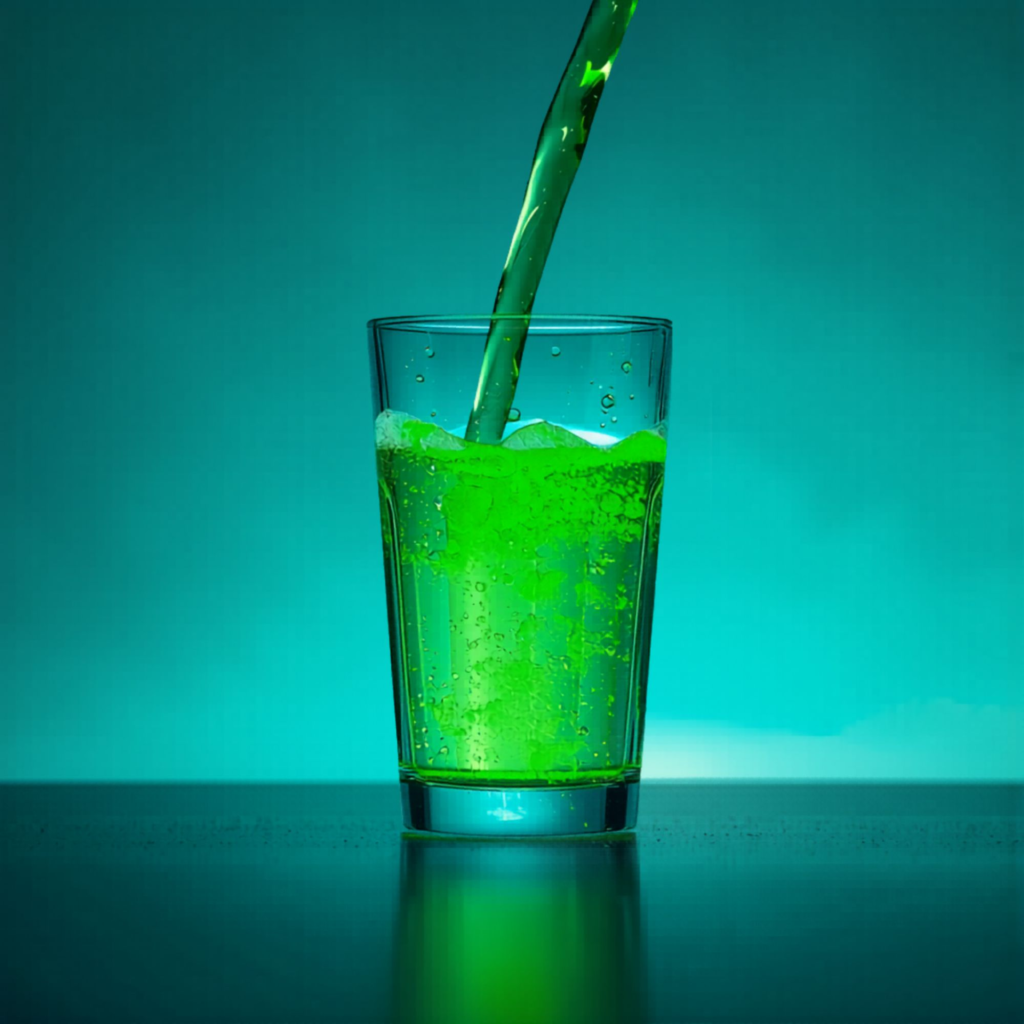
2. Mountain Dew 🟢 — Looks Radioactive, Apparently Acts the Part
If you’ve ever stared at a bottle of Mountain Dew and thought, “this looks like something a mad scientist would brew in a basement,” you’re not alone.
Mountain Dew is unlikely to be found in the European Union, the United Kingdom, Japan, and India. From August 2025, it became increasingly hard to find in Canada, too. The reason? Bans on brominated vegetable oil, or BVO.
BVO is a stabilizer made with a blend of vegetable oil and bromine that allows citrus-flavored drinks to taste the same all the way down the bottle. Animal studies have found that brominated vegetable oil can lead to issues with the heart, thyroid, and liver, as well as potential bromism, which has symptoms including memory loss and ataxia.
Good news: Pepsi discontinued the use of BVO in Mountain Dew by 2020, and the U.S. banned BVO altogether in 2024.
Better late than never, I suppose.
3. Stove Top Stuffing 🦃 — Thanksgiving’s Forbidden Side Dish

This one stings a little.
Families across the United States love Stove Top stuffing for its speed and convenience, but even an upgraded version of the boxed stuffing is unlikely to appear on shelves in the European Union, Japan, or the United Kingdom. It’s all down to restrictions on the use of preservatives butylated hydroxytoluene (BHT) and butylated hydroxyanisole (BHA), which both feature on the box’s ingredient list.
These preservatives have raised concerns due to suspicions of potential carcinogenic properties and their potential to hinder blood clotting.
Which… is not exactly the vibe you want at the holiday dinner table.
4. Frosted Flakes & Froot Loops 🐯 — Tony the Tiger Has International Travel Restrictions
Sorry, kids. BHT is in Frosted Flakes too, where it serves as a preservative. That means Frosted Flakes are also banned in Europe and Japan.
And Froot Loops?
They’re a breakfast staple in millions of households across the United States, but they haven’t always been popular overseas. The ingredients are a laundry list of restricted items in the European Union, including the preservative butylated hydroxytoluene (BHT). Likewise, in the United Kingdom, BHT can only be used in oral hygiene products.

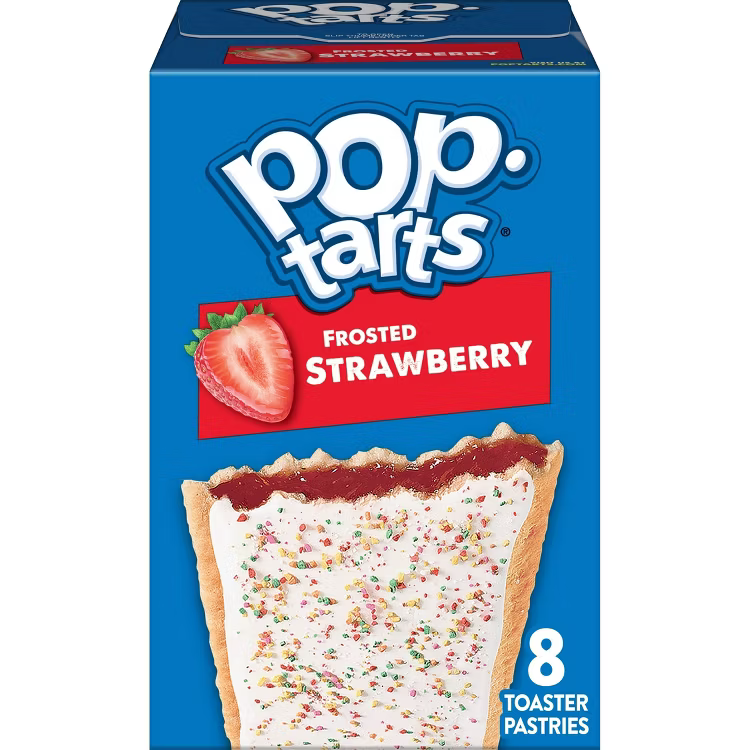
5. Pop-Tarts 🍓 — Banned for Being Extra
The toaster pastry that fueled an entire generation’s school mornings has run into some international resistance. The colorful breakfast pastry contains food dyes Yellow 5, Yellow 6, and Red 40, which are still deemed safe to eat domestically but are partially banned in the European Union.
6. Ritz Crackers 🧀 — A Buttery Little Heartbreak

You know that satisfying snap of a Ritz cracker? Europe says, non, merci.
Nabisco’s Ritz is among the leading cracker brands in the United States. Its namesake cracker contains partially hydrogenated cottonseed oil, which is a trans fat that is currently banned domestically and is limited in many other countries like Switzerland, Austria, Hungary, Iceland, Norway, and Denmark.
The plot twist here: trans fats are technically banned in the U.S. now too, but the FDA has ruled that partially hydrogenated oils are no longer “generally recognized as safe.” Most have been removed from the food supply, but small amounts can still be present. U.S. labeling rules also allow products with less than 0.5 g per serving to round down to “0 g trans fat,” which means they can still sneak into your diet.
In other words: that “0g trans fat” label might be doing some heavy lifting.
7. Little Debbie Swiss Rolls 🍫 — Norway Said Nope

Little Debbie may be sweet, but other countries don’t necessarily see it that way. In particular, her Swiss Rolls aren’t a snack you’ll find in many European countries because they are banned or restricted due to Yellow No. 5 and Red No. 40. While the FDA has deemed these dyes safe (for now), it’s also worth considering that they may cause hyperactivity in children.
Norway and Austria have banned the chocolate treats outright.
8. Gatorade 💪 — Hydration with a Side of Side-Eye

You’d think a sports drink marketed to athletes would be welcomed everywhere. Nope.
This sports drink claims to replenish electrolytes, but it also contains food dyes Yellow 5 and Yellow 6. These artificial colors are banned in foods for infants and children in the European Union, and they must also carry warnings on all other products there. They are completely banned in Norway and Austria.
9. Farmed Salmon 🐟 — That Pink Glow Isn’t Always Natural
Here’s a wild one.
Farmed salmon in the U.S. contains a compound called astaxanthin, which is used to create that bright pink color that gives salmon its signature appearance. However, there haven’t been enough long-term studies on the ingredient to know what effects it might have on the human body over time. Australia and New Zealand have banned fish containing this chemical.
So that gorgeous fillet of salmon? It might be wearing makeup.

Honorable Mentions: The “Wait, Really?” Round 🎤
- Wheat Thins:
A popular snack in the U.S., but you’re not going to find them in the UK, parts of Europe, or Japan. That’s because they contain BHT — butylated hydroxytoluene — and there’s some evidence the chemical may be a carcinogen.
- Maraschino cherries:
Those bright red cherries that often appear atop banana splits aren’t widely eaten around the world. They contain Red 40, a dye that’s banned in places like the UK and Switzerland. Some people suffer from allergic reactions when they eat the dye.
- Coffee Mate:
Banned in Denmark, Norway, Iceland, and Switzerland.
- U.S. milk with rBST:
This hormone, which is used to increase the production of cow’s milk, is banned in Canada and Europe, but is still used by some companies in the US. Some companies — one of the more famous ones being Ben and Jerry’s — use rBST-free milk.
So… Should You Panic and Throw Out Your Pantry?
Take a breath. Don’t dump your spice rack into the trash just yet.
Even though some of these food additives are banned in other countries, the FDA considers them safe. Chemicals are not banned only for safety reasons — sometimes economics, trade, and politics are involved.
So the international ban list isn’t always a perfect map of “what will hurt you.”
There IS some movement in the U.S., though.
In January 2025, the U.S. Food and Drug Administration announced a ban on the use of Red Dye No. 3 in all foods and ingested drugs. Enforcement of this ban is scheduled to begin on January 15, 2027, for foods and January 18, 2028, for ingested drugs.
And some US states are beginning to take matters into their own hands regarding food dyes — California is leading the charge, banning six synthetic food dyes from schools: red 40, yellow 5, yellow 6, blue 1, blue 2, and green 3.
The best advice? It’s almost embarrassingly simple. As one expert put it:
“Check the label. If there are a bunch of ingredients you can’t pronounce, that’s a good indicator that the item is highly processed.”
It is a lot easier said than done. But fresh fruits and vegetables, oils, cooking at home, like getting back to being in the kitchen with you and your family — I think that’ll solve a lot of issues.
The Takeaway 🥗
You don’t need to swear off Pop-Tarts forever or smuggle European cereal across the border in your suitcase (though, no judgment). The smartest move is awareness: read the labels, lean into whole foods most of the time, and save the neon-colored snacks for the occasional nostalgic treat.
Because at the end of the day, the most powerful thing in your kitchen isn’t a banned-ingredient checklist — it’s you, with a knife, a cutting board, and a fridge full of real food. 🔪🥕
Now if you’ll excuse me, I have a sudden, suspicious craving for a Pop-Tart.
 Strawberry Mochi Squares
 Easy Blanched Shanghai Bok Choy
 Strawberry Chia Seed Jam
 Matcha Mochi Squares
 Pan-Seared Oven-Finished Duck Breasts
 Counter Culture: What to Keep Out of Your Fridge
 Banana Protein Muffins
 Blueberry Chia Seed Jam
 Chocolate Cupcakes
 Vanilla Cupcakes