
This post contains affiliate links. As an Amazon Associate, I earn from qualifying purchases.
Reverse Sear Standing Rib Roast Convection Baked for Precision Doneness
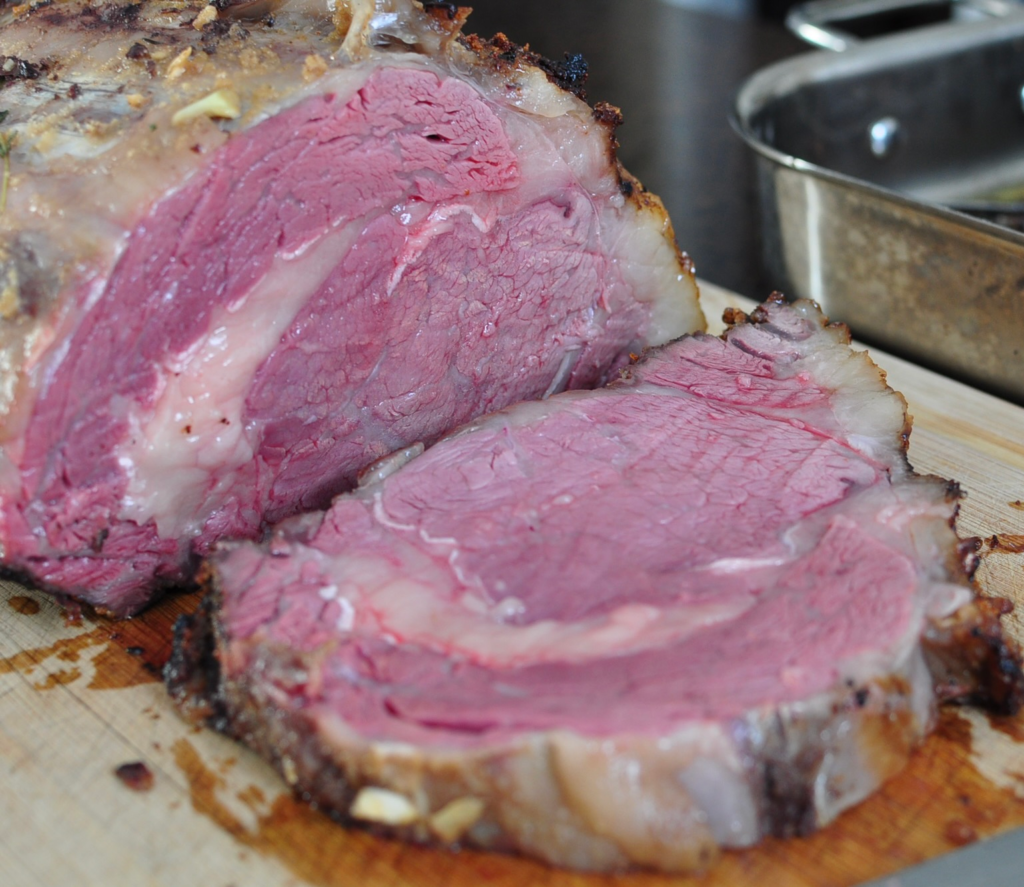
You have come to the right place if you are looking to cook a standing rib roast. My method is focused on temperature control, ensuring that a premium cut like a prime rib roast is treated with the precision it deserves. By combining the science of the reverse sear with the unique chemistry of my seasonings, this recipe will blow every other prime rib recipe out there away.
Why Convection Bake at 215°F?
Cooking at this low temperature of 215°F minimizes the grey band – that overcooked, tough outer layer often found in high heat roasts. Using the convection setting is a game-changer because it circulates hot air consistently around the prime rib. This constant airflow:
- Dries the surface: It whisks away moisture from the exterior, which is essential for a superior crust later.
- Even heat distribution: It eliminates cool pockets in the oven, especially while cooking at such a low temperature. This ensures that the rib roast cooks at the exact same rate from top to bottom.
The Magic of the Reverse Sear
Traditional roasting starts with high heat and moves to low, but reverse sear flips the script for a more predictable, edge-to-edge pink finish.
- Uniformity: By gently raising the internal temperature first, the muscle fibers relax rather than seize, resulting in a more tender bite.
- The Perfect Surface: Because the low and slow phase dries out the exterior of the roast, the final broil works instantly. You aren’t wasting energy boiling off surface moisture or risk cooking the surface of the meat, you are going straight to the Maillard reaction.

Enhancing Flavor with Soy Sauce
While salt is standard, using soy sauce in your rub introduces a deeper dimension of flavor:
- Unami Bomb: Soy sauce is rich in glutamates, which amplify the natural beefiness of the rib roast, making it taste more savory and robust.
- Better Browning: The natural sugars and amino acids in soy sauce react beautifully under the broiler, helping you achieve a dark, mahogany-colored crust in that final 2 to 3 minutes of searing.
- Deep seasoning: The liquid helps the garlic and butter penetrate the surface more effectively than a dry rub alone.
The Final Finish
By broiling for 2 to 3 minutes per side at the very end, it provides the intense heat necessary for a charred, aromatic crust without overcooking the center. The result is a roast that is buttery and tender on the inside with a savory, salt and garlic infused crunch on the outside.
Sides that go perfect with Prime Rib…

Creamy Baked Truffle Mac and Cheese with Beef Tallow
Your mac and cheese era just got a serious upgrade. This Creamy Truffle Mac and Cheese layers cheddar gruyere black truffle cheese and sharp cheddar into a silky, baked masterpiece built on a buttery beef tallow roux. No panko, no fuss — just pure, gooey, truffle-kissed comfort food the whole family will devour.

Beef Tallow Roasted Little Potatoes
These beef tallow roasted little potatoes are the crispiest you’ll ever make. Par-boiled, roughed up, and tossed in herb-infused beef tallow, they roast into golden, craggy bites with shatteringly crisp edges and fluffy centers — finished with fresh garlic, thyme, and scallions.
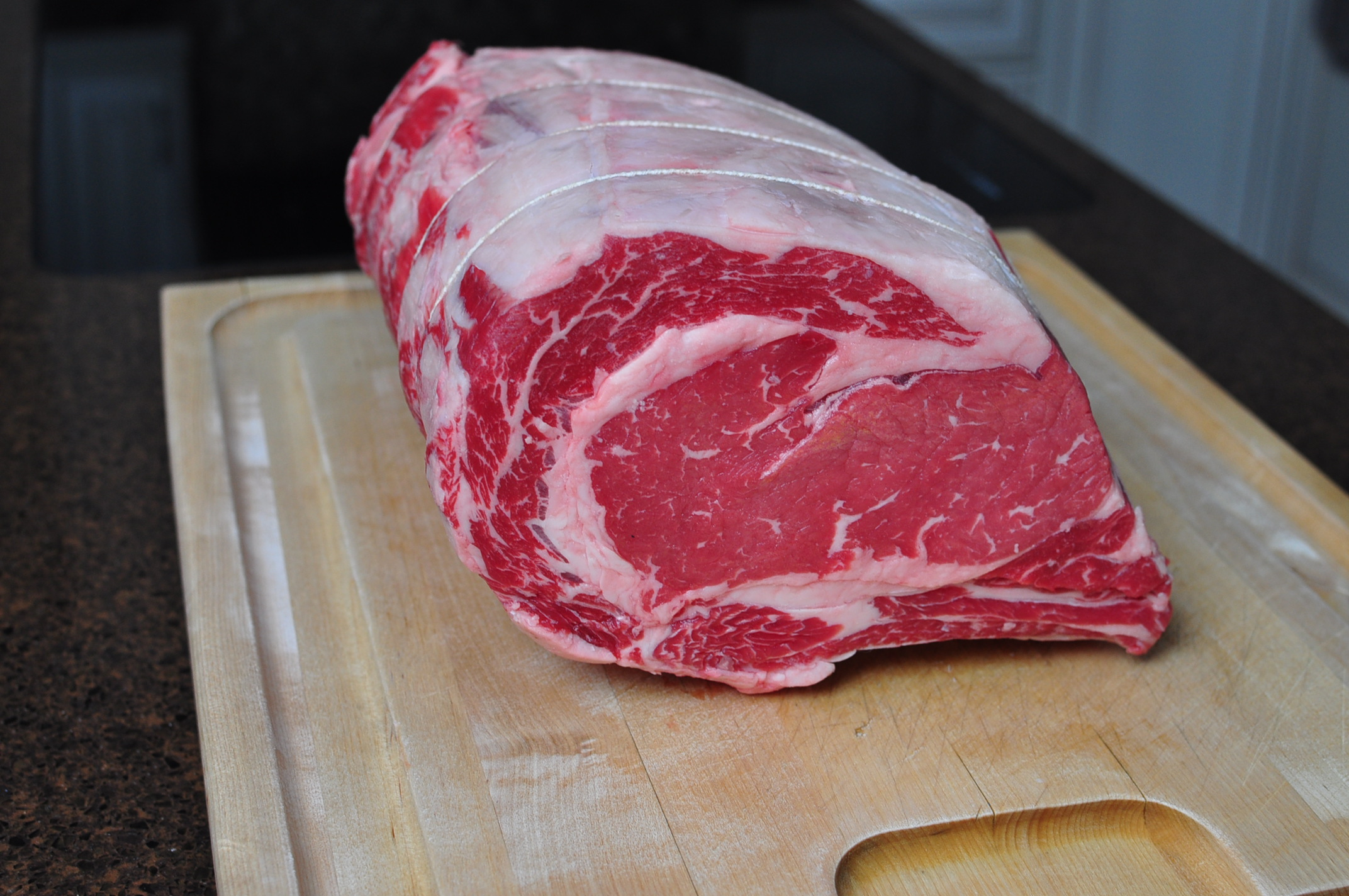
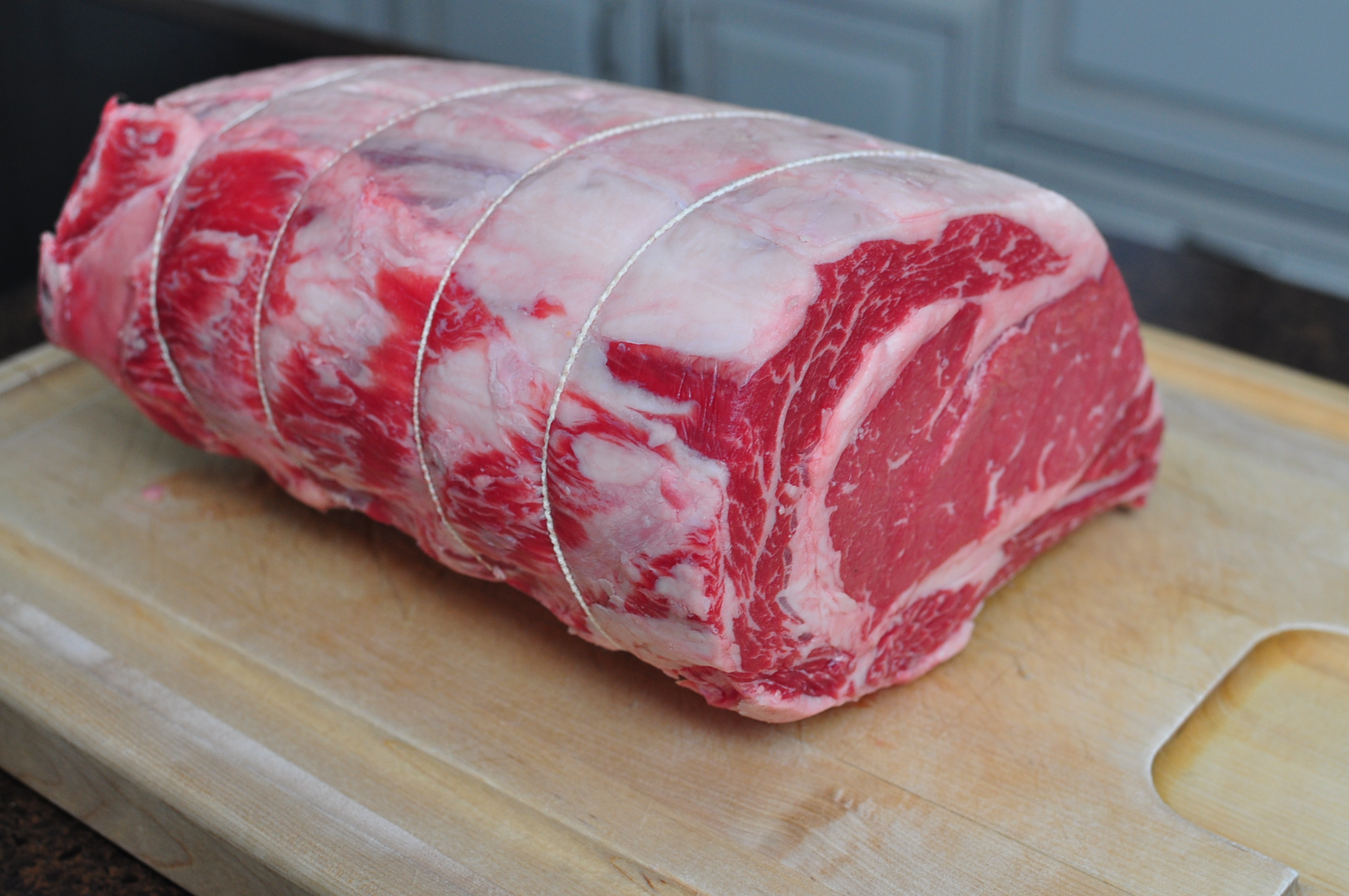
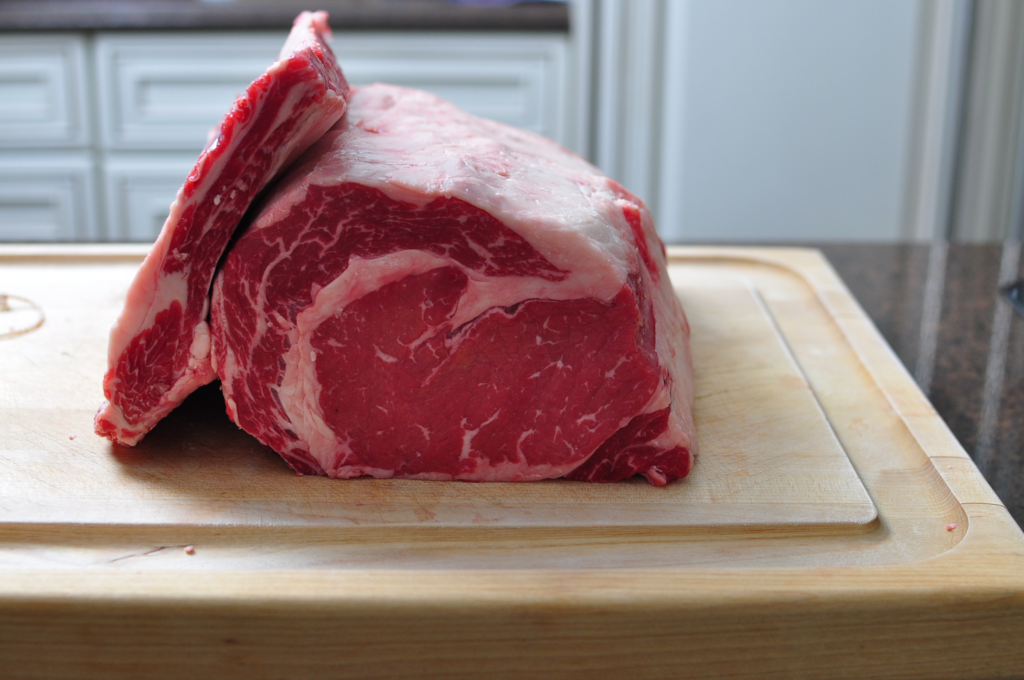
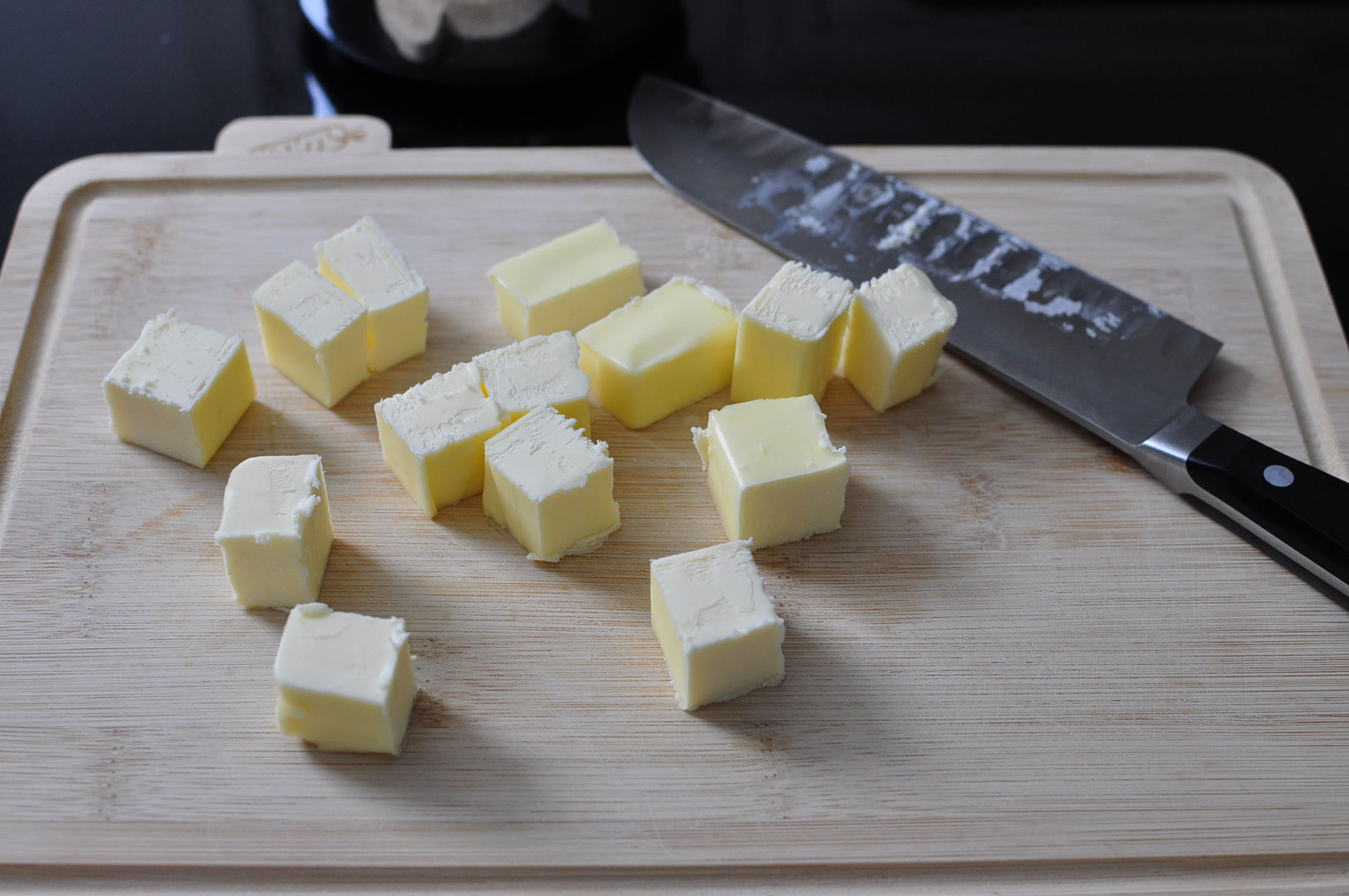
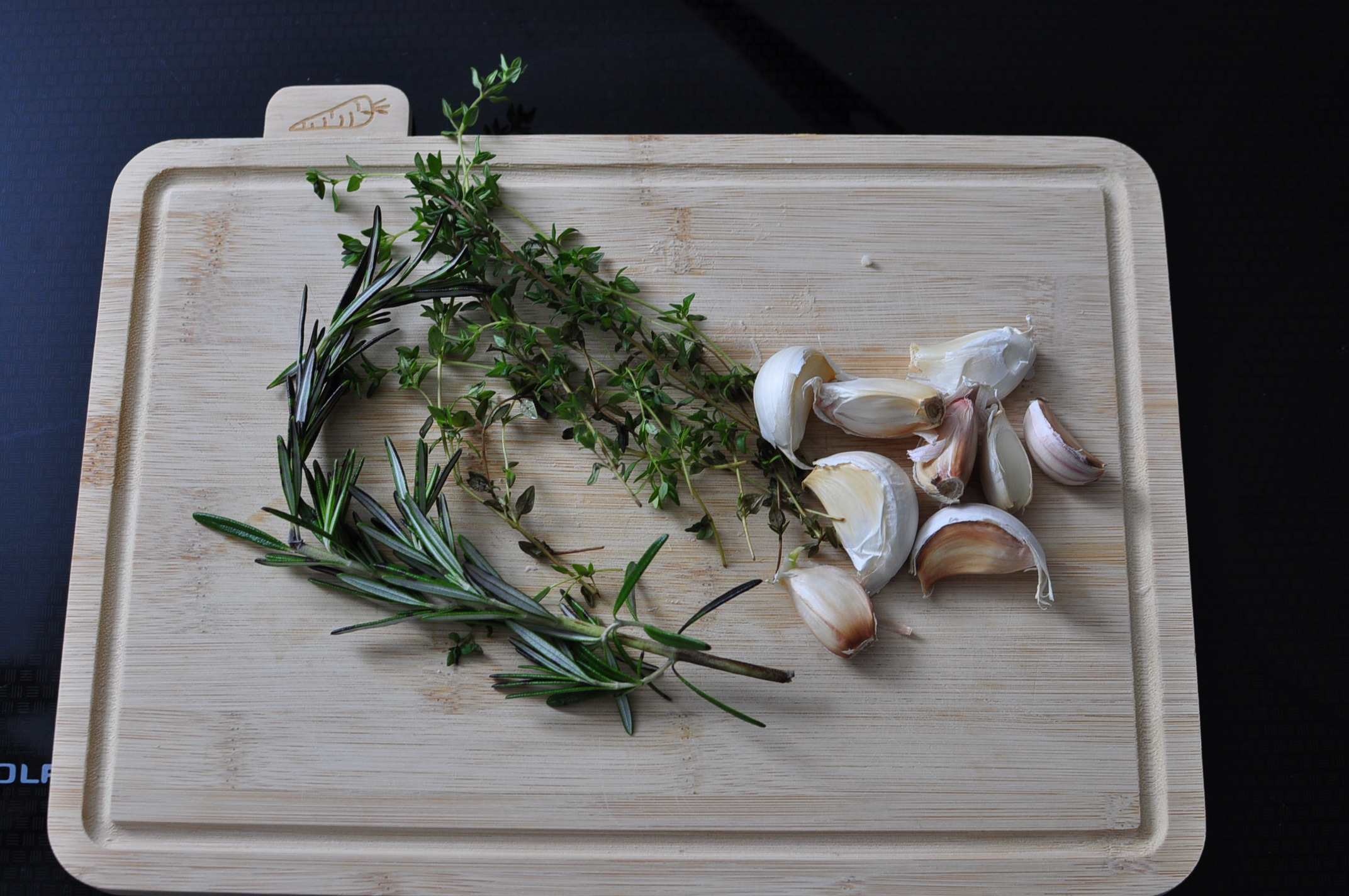
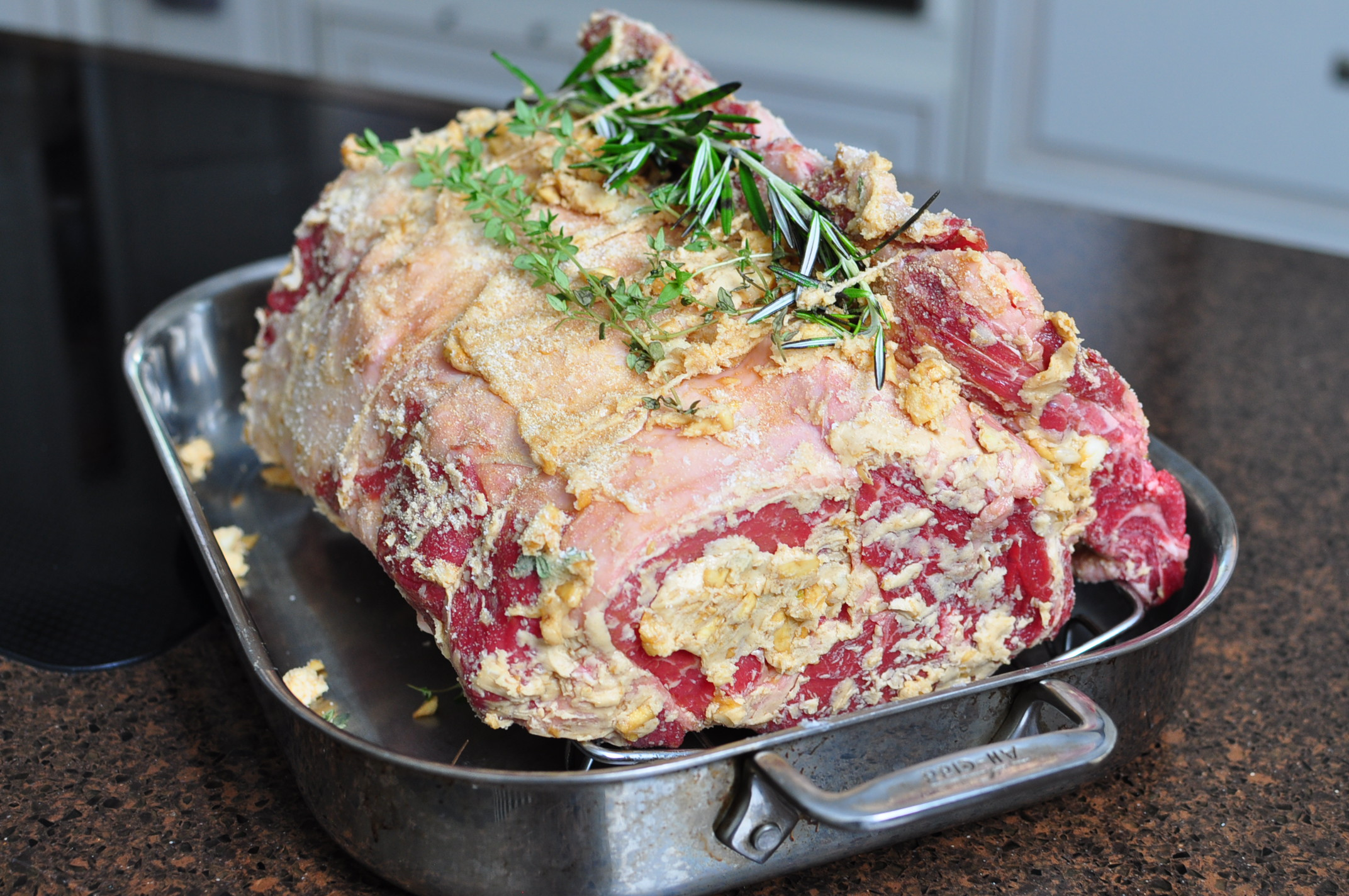
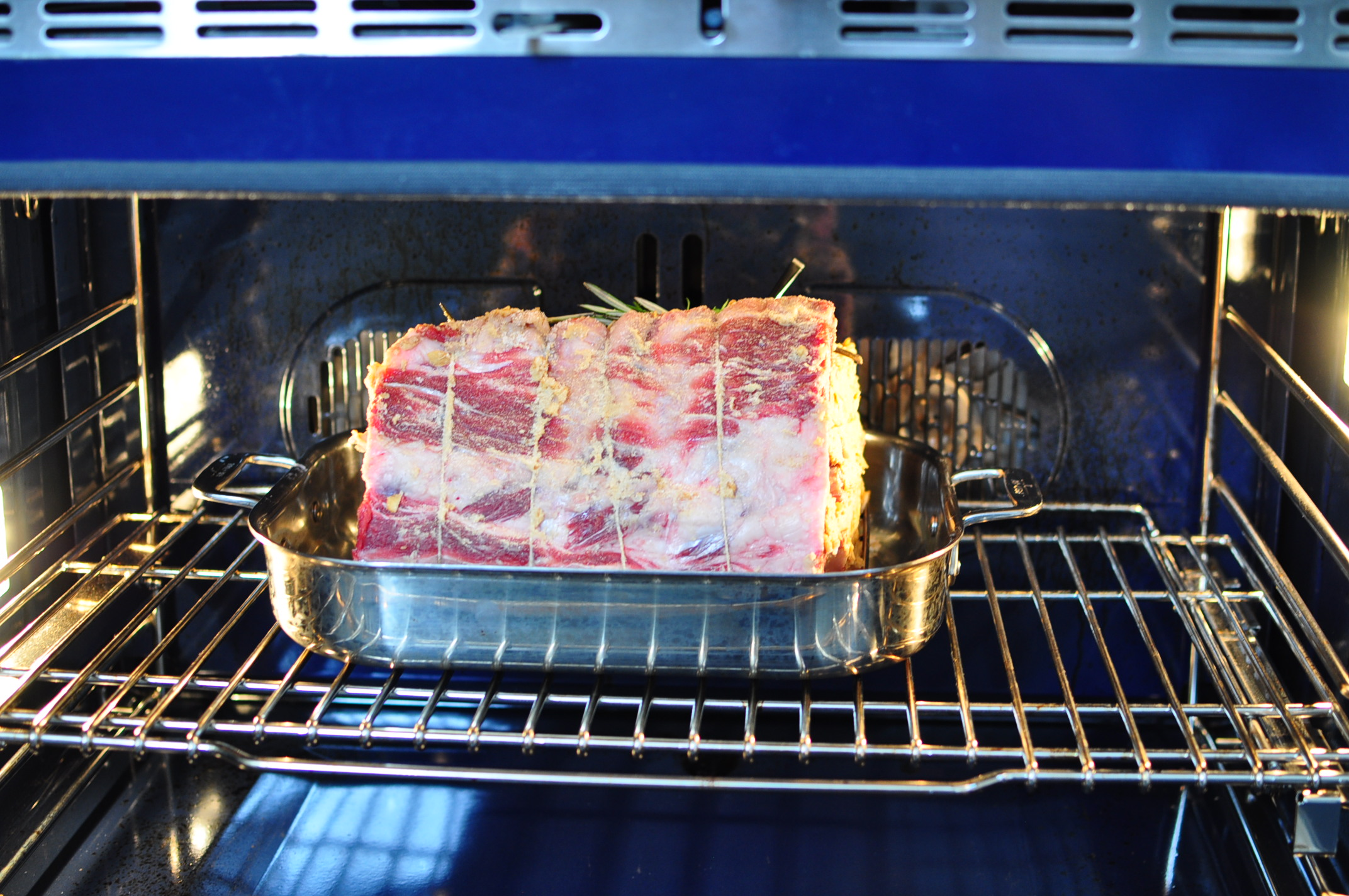
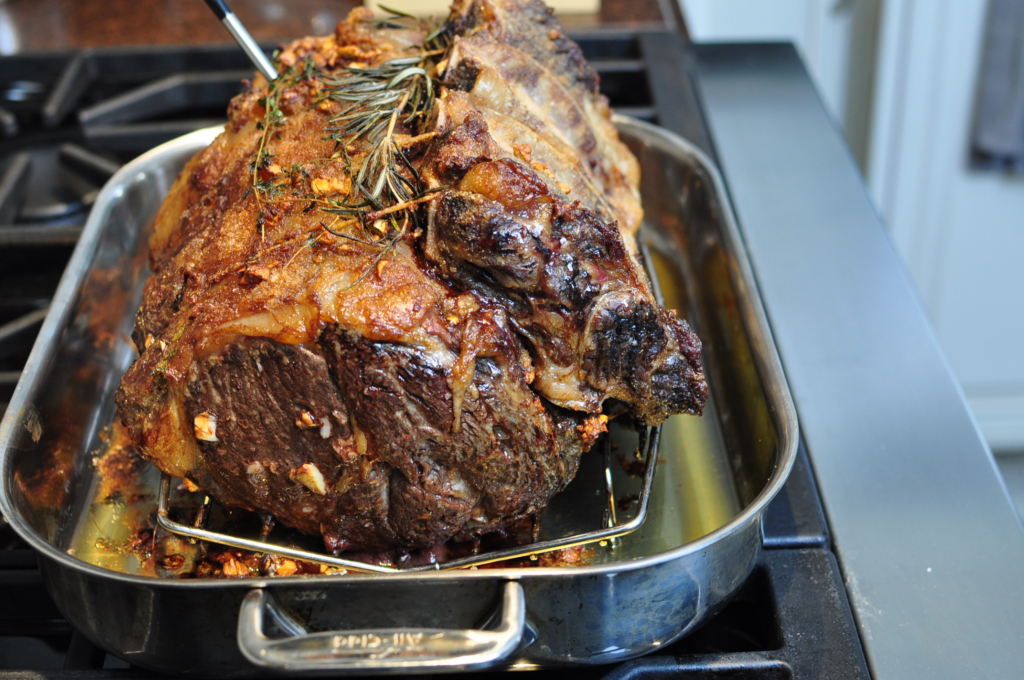
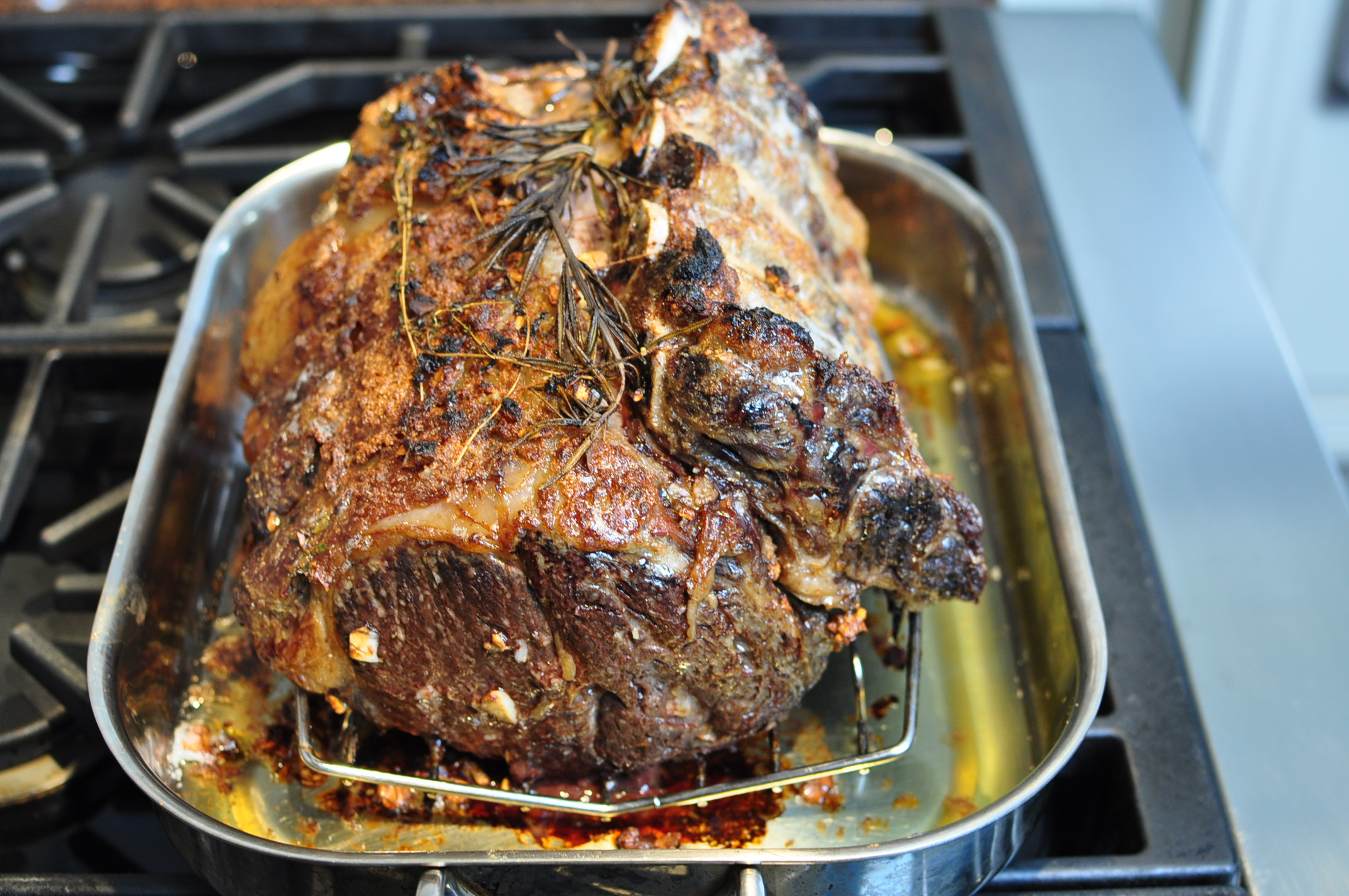
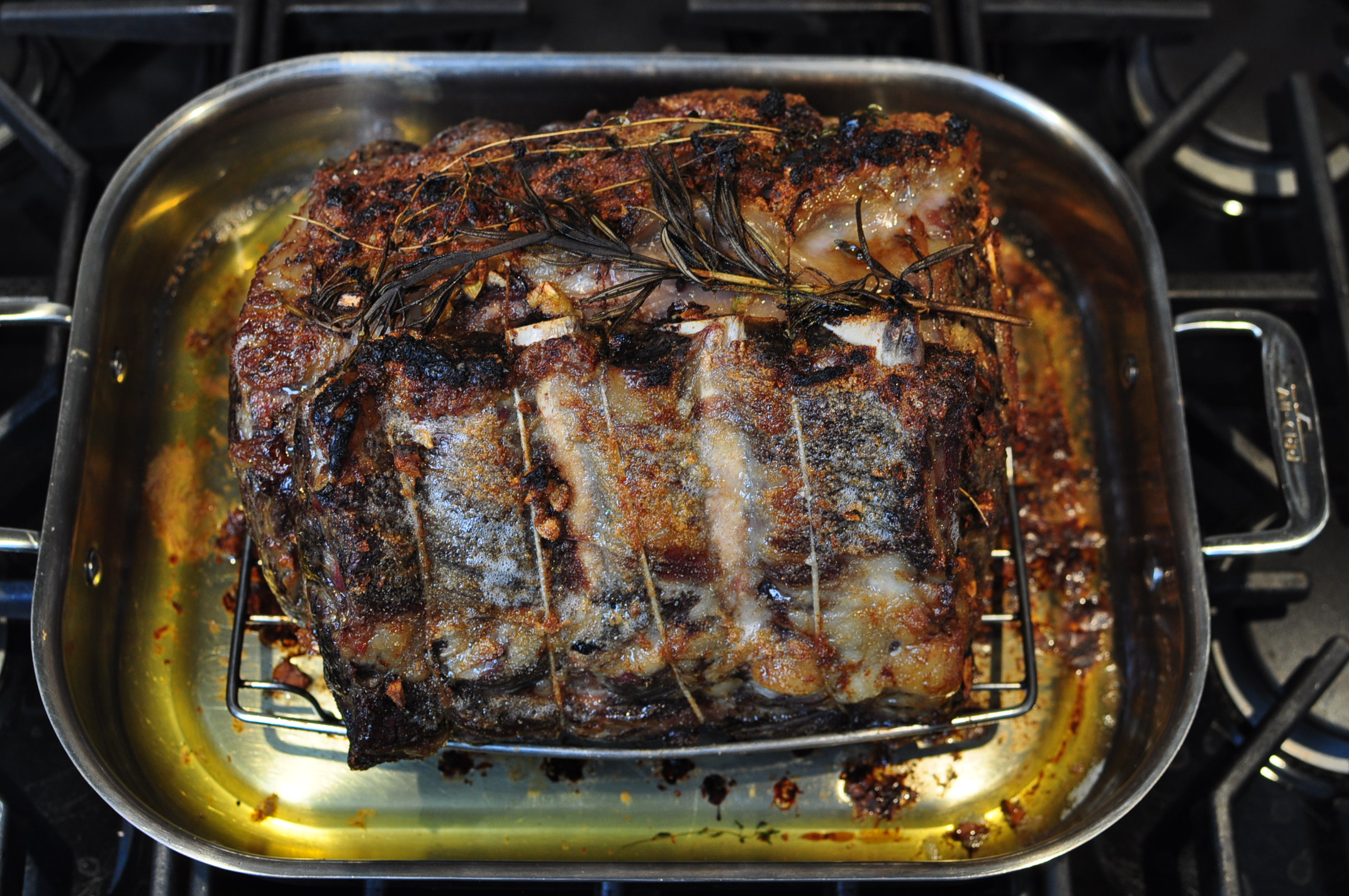
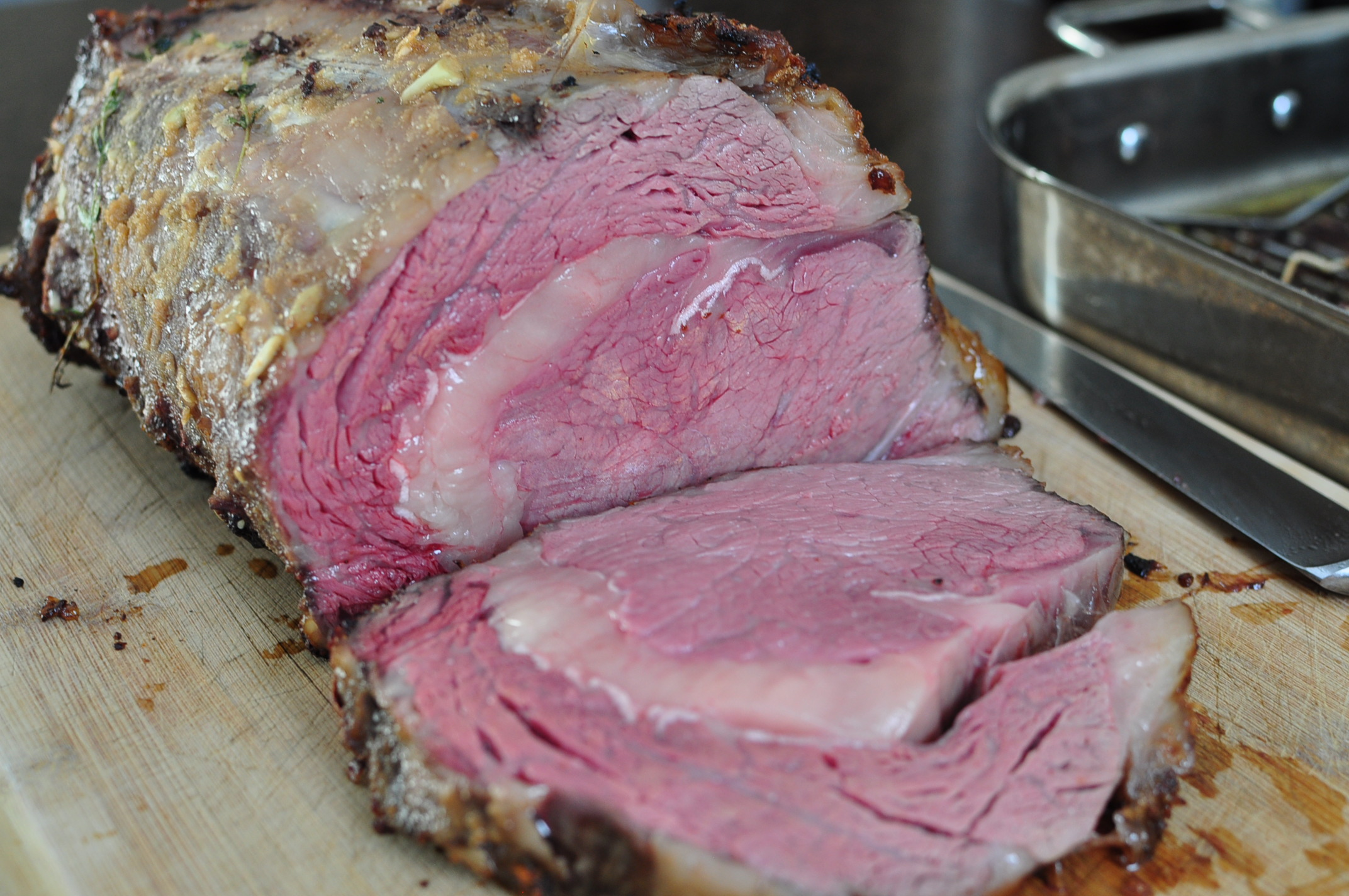
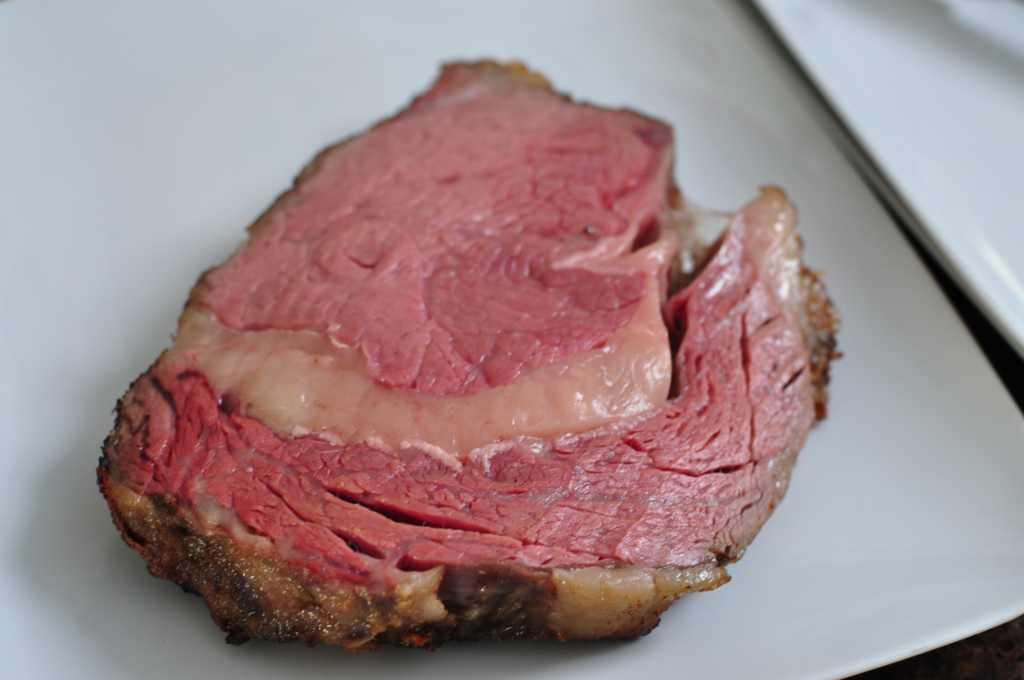
Visual Step-by-Step Guide for Reverse Sear Standing Rib Roast and Cradling the Rib Eye Cap:



Prime Rib Reverse Sear Doneness and Temperature Chart (at 215°F Convection Bake)
| Doneness Level | Pull Temp (Internal Temp When Removed From Oven) | Final Temperature | Weight / Time |
|---|---|---|---|
| Rare | 115°F | 122°F to 125°F | 6 to 8 lbs / 1.45 – 2.5 hrs 9 to 12 lbs / 2.25 – 3.5 hrs |
| Medium-Rare | 120°F | 128°F to 131°F | 6 to 8 lbs / 2 – 3.5 hrs 9 to 12 lbs / 2.25 – 4 hrs |
| Medium | 130°F | 135°F to 140°F | 6 to 8 lbs / 2.5 – 4 hrs 9 to 12 lbs / 2.75 – 4.5 hrs |
| Medium-Well | 135°F | 145°F to 150°F | 6 to 8 lbs / 3 – 4.5 hrs 9 to 12 lbs / 3.5 – 5 hrs |
Reverse Sear Bone In Prime Rib
Achieve Steakhouse Perfection with the Reverse Sear Method and Convection Bake
By mastering the reverse sear method in a convection oven, you by-pass the common pitfalls of traditional roasting. Say goodbye to the gray ring and hello to uniform, edge-to-edge medium rare interior that this finest of steaks deserves. By starting the roast at a low temperature, you allow the meat to cook evenly while the convection fan circulates dry air around the exterior. This process dries out the surface of the roast, which is the secret for achieving a heavy, dark and flavorful crust during the final high heat broil to sear.
- Prep Time: 30 minutes (trimming, salting, mixing the butter rub, tying the roast)
- Cook Time: 2 hours 36 minutes (about 2.5 hours of low roasting + 6 minutes broiling)
- Total Time: 5 hours 36 minutes (includes room temperature acclimation and resting, but excluding the overnight dry brine)
- Yield: 10 servings 1x
- Category: Dinner
- Method: Baking, Roasting
- Cuisine: American
- Diet: Low-Carb
Ingredients
- 6 to 12 pound bone-in rib roast (boned and tied)
- 2 tablespoons kosher salt
- 1 stick of butter, softened
- 2 tablespoons low-sodium soy sauce
- 8 to 10 cloves of garlic, minced
- 1 teaspoon garlic granules
- 1 teaspoon onion powder
- 6 to 8 sprigs fresh thyme
- 1 large sprig fresh rosemary
Instructions
- Prepare a roasting pan or baking sheet with a wire rack inserted inside the pan. Untie the bones from the prime rib and pat dry any moisture from the roast and bones. Place the prime rib roast on the wire rack and evenly sprinkle salt over the entire roast and bones. You do not need to re-attach the bones now. Just place the bones next to the roast and let that dry brine, uncovered, in the fridge for 1 to 2 days.
- Two hours before the planned cook time, remove the prime rib from the fridge to let that acclimate to room temperature. This will allow for more even cooking.
- Meanwhile, combine the softened butter, soy sauce, minced garlic, garlic granules and onion powder in a bowl. Mix that all together well. Rub this butter mixture all over the prime rib and bones.
- Cut 3 to 6 pieces of kitchen twine long enough to wrap and tie around the roast and bones. You will not place the bones back in its original position. Re-position the bones so that it covers the ribeye cap. Although reverse searing this prime rib will help this roast cook evenly and minimize the overcooked grey edges of the prime rib, re-positioning the bones over the ribeye cap will further help protect the delicate ribeye cap, which is the best part of the prime rib. This will not be a perfect fit and may appear awkward, but position the curve of the bone centered over the middle of the rib eye cap and tie it tightly in place with the kitchen twine. Tuck a few sprigs of thyme between the bones and the roast before tying it together. Lay the rest of the thyme and rosemary sprig on top of the roast.
- Position the entire roast back on the wire rack in your roasting pan. With the bones re-positioned on the rib roast, the bones will now sit on the top/side of the roast. It’s important to keep the wire rack on the pan so the new bottom part of the prime rib will cook evenly.
- Set the bottom oven rack to the the lower-middle level and remove the top rack to allow more space in the oven if needed. Preheat oven to 215°F on convection bake. Insert a Meater Thermometer or other meat thermometer into the center of the prime rib. Cook until the temperature of the rib roast is 5°F below the desired final temperature. It took my 10.75 pound (4 bones) rib roast 2 1/2 hours to reach 125°F.
- Remove the rib roast from the oven and tent it loosely with aluminum foil. Let that sit for 30 minutes and up to 1 1/2 hours.
- Ten minutes before you are ready to serve, set the oven broil to medium (level 2). Remove the foil tent and broil the prime rib for 2 to 3 minutes until you have a nice sear on top. Remove the roast and turn it over to the opposite side and broil for another 2 to 3 minutes until you have a nice sear. You can remove the twine and bones from the rib roast to give the ribeye cap section of the prime rib a sear as well. (I didn’t remove the bones to sear the ribeye cap because the entire rib roast looked so pretty with the bones tied and I wanted to take a picture!)
- Untie and remove the bones, if you haven’t done so already. Carve and serve!
Nutrition
- Serving Size: 1 slice (~12 to 16 ounces)
- Calories: 985 kcal
- Sugar: 0.2 g
- Sodium: 1250 mg
- Fat: 83.5
- Saturated Fat: 36.2 g
- Unsaturated Fat: 38.4 g
- Trans Fat: 2.0 g
- Carbohydrates: 1.5 g
- Fiber: 0.2 g
- Protein: 56.4 g
- Cholesterol: 235 mg
❓ FAQ’s for Reverse Sear Bone-in Prime Rib
Reverse sear means cooking the roast low and slow first to bring it to your desired internal temperature, then finishing with high heat (a broil or hot oven blast) to develop a flavorful crust. The reverse sear method ensures a perfectly uniform internal temperature from edge to edge, minimizing the gray ring often associated with traditional searing.
Ask your butcher to cut the bones off, but then tie them back on. This gives you all the benefits of the bones with none of the work of having to slice them off. In this recipe, you’ll untie them to apply your rub, then reposition the bones over the ribeye cap for added protection before re-tying.
You can, but reattaching them is the standout step in this recipe. The bones protect the tender ribeye cap from the faster-cooking edges, and the thyme and rosemary tucked underneath add subtle aromatic flavor as it roasts.
Yes, and it’s worth every hour of wait time. Placing the roast on a rack set over a baking sheet and refrigerating it allows the surface to dry and the salt to penetrate deeply into the meat. This step is essential for flavor and for developing a good crust later.
Low-sodium soy sauce brings a savory, umami boost that deepens the beefy flavor of the prime rib. It blends into the softened butter, garlic, garlic granules, and onion powder to create a paste-like rub that clings beautifully to the meat.
The ribeye cap (also called the spinalis) is the outer muscle of the rib roast and is widely considered the most flavorful and tender part of the cut. The chuck end of the ribs is often more marbled, tender, and has a larger ribeye cap — the best part! By repositioning the bones over this area before roasting, this recipe shields it from the heat that tends to concentrate at the edges.
Absolutely — and it’s actually encouraged. The dry brine is done 1–2 days in advance, and you can make the roast more than an hour ahead and do the last step of high-heat roasting right before serving. This gives you incredible flexibility when hosting a holiday dinner.
Yes. Resting allows the juices to redistribute throughout the roast so they stay in the meat instead of running out when you slice. This keeps every slice juicy and flavorful.
Pair this masterpiece with your favorite sides like creamy mashed potatoes, roasted vegetables, or a classic au jus for a meal that’ll leave your guests raving. Horseradish sauce, Yorkshire pudding, and roasted Brussels sprouts are also fan favorites.
If buying a bone-in roast, plan on 1 pound per guest you plan on serving. If you’re serving lots of sides, you can stretch it a little further.
SHOP FOR THIS RECIPE


 Strawberry Mochi Squares
 Easy Blanched Shanghai Bok Choy
 Strawberry Chia Seed Jam
 Matcha Mochi Squares
 Pan-Seared Oven-Finished Duck Breasts
 Counter Culture: What to Keep Out of Your Fridge
 Banana Protein Muffins
 Blueberry Chia Seed Jam
 Chocolate Cupcakes
 Vanilla Cupcakes