

This post contains affiliate links. As an Amazon Associate, I earn from qualifying purchases.
Easy, Flaky, No Lamination, No Freezing Butter, Cheater’s Croissant Recipe Using Warm Butter
Somewhere between bite two and bite three of a scallion pancake, I had a thought that changed my baking life: why am I fighting a frozen brick of butter when this thing is flakier than most croissants I’ve paid actual money for?
Scallion pancakes get their layers from a warm oil-and-flour roux, spread thin and rolled up. No chilling. No lamination. No anxiety about your butter melting before it is supposed to. So I asked the obvious question — could soft, room-temperature butter do the same job for croissants? My friends, it absolutely can.
These easy flaky cheater’s croissants made with warm butter use just six ingredients: whole milk, egg, instant yeast, all-purpose flour, granulated sugar, and salted butter. That’s it. No European butter splurge, no special equipment.

The Scallion Pancake Trick That Started It All
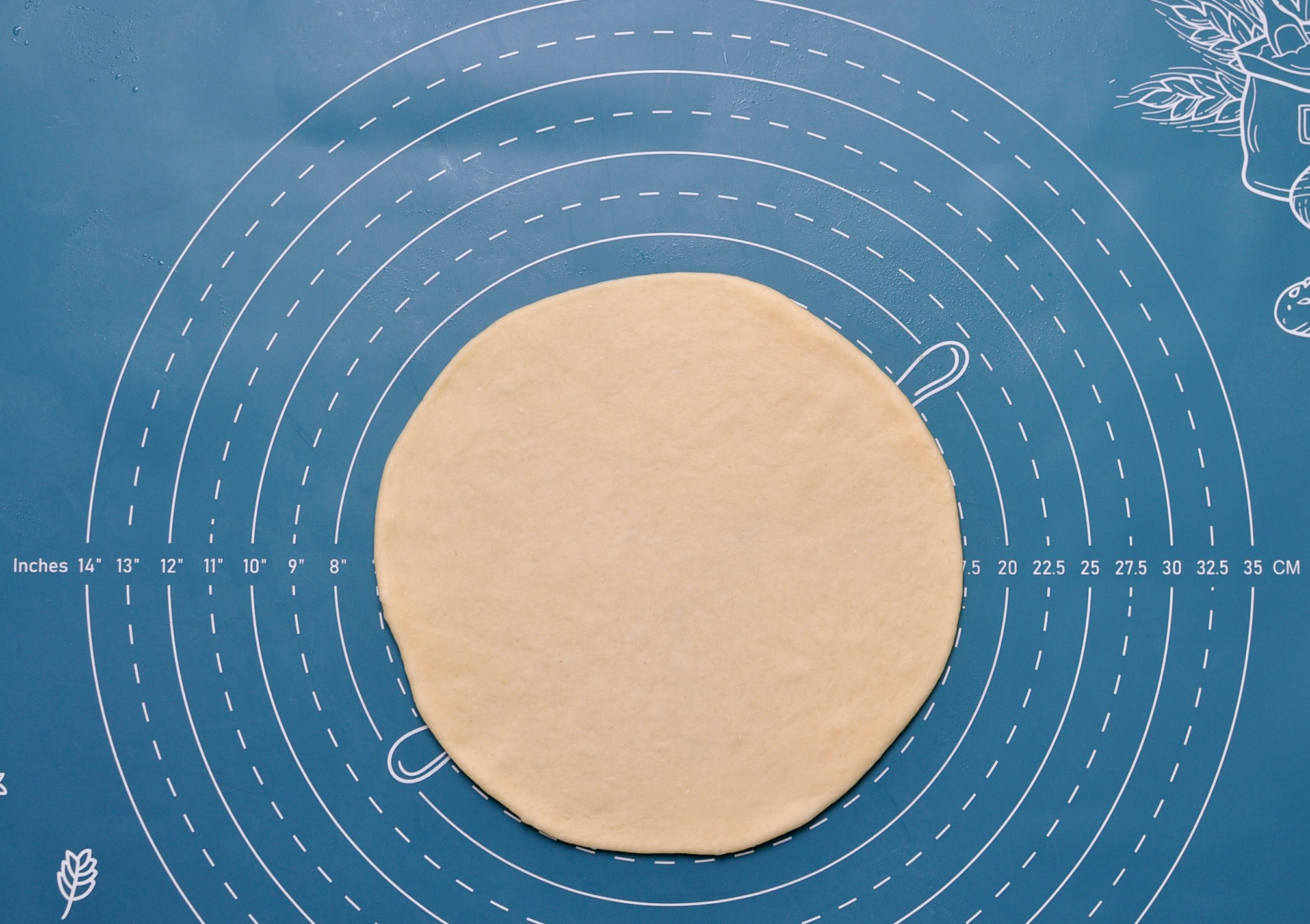
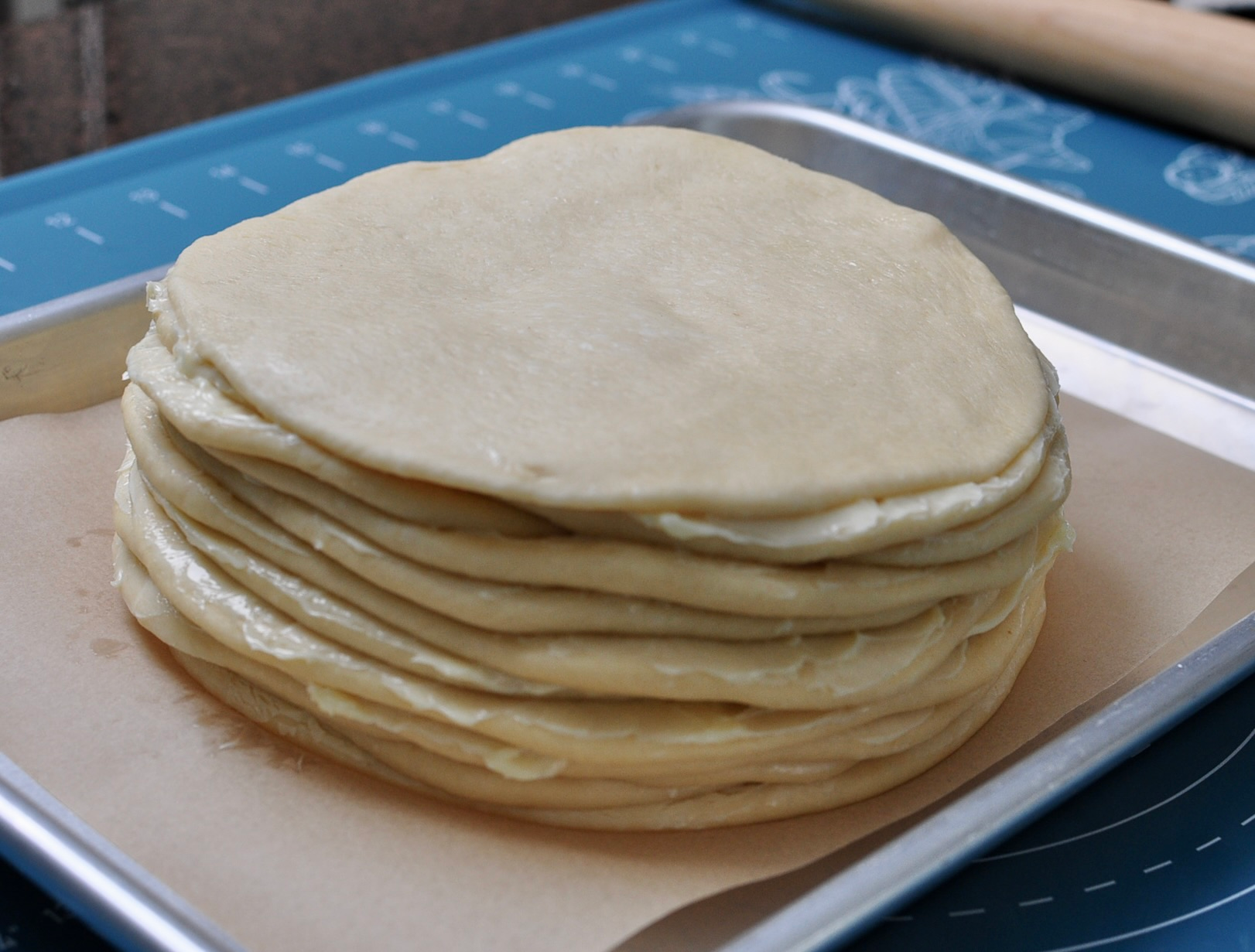
Instead of encasing a cold butter block and performing three letter folds with hospital-grade precision, I roll the dough into twelve 7-inch rounds, spread each with 1 tablespoon of soft, room temperature butter, and stack them like the world’s most delicious deck of cards. Twelve rounds, twelve perfectly even butter layers — no guessing, no uneven smears, no butter escaping out the sides.
Twelve Rounds, Twelve Perfect Butter Layers
Then the stack gets rolled out to roughly 14 inches, flattened into one gloriously layered disc, cut into 12 triangles, and rolled into classic croissant shapes. Simple math, gorgeous results.
No Chilling, No Folding, No Butter Block Drama
Here’s the part that gets me every time: as the shaped croissants rise, you can literally watch the layers separate and puff. It’s the best free entertainment in baking. And once they hit the oven, those layers explode into flaky, golden, buttery perfection.
What They Look Like Rising (Spoiler: Magnificent)

Six Ingredients You Already Have
I’ll say the controversial thing out loud: this is the perfect croissant. I wouldn’t go back to traditional lamination even if someone handed me a free weekend and a marble countertop. Why would I? These are it.
Tips for the Flakiest Cheater’s Croissants
- Butter should be soft and spreadable, not melted. Think mayo texture, not soup.
- Roll each round evenly — thin, consistent rounds mean cleaner layers.
- Don’t rush the rise. That’s where the layers do their thing.
- Egg wash generously for that lacquered bakery shine.
- Let them cool at least 10 minutes before tearing in, if you have that kind of willpower. I do not.
Try our other bread recipes…

Chinese Bakery Style Milk Bread
Soft, fluffy Chinese bakery-style milk bread made without tangzhong or butter. This easy stand mixer dough uses bread flour, cake flour, heavy cream, milk, egg, sugar, and yeast for tender, rich, buttery-tasting bread perfect for buns, rolls, or loaves.
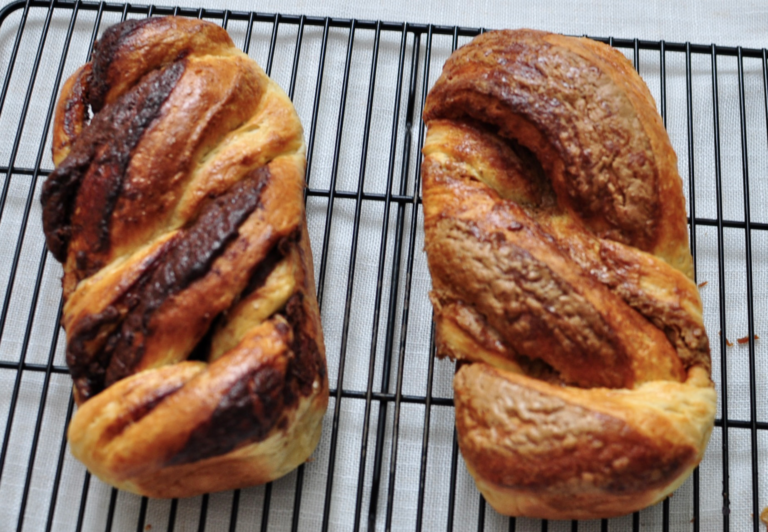
Nutella & Cookie Butter Croissant Babka
This isn’t your average babka. This Nutella Croissant Babka starts with a genius “cheater’s” croissant dough — flaky, buttery, and totally doable. It looks like a masterpiece and tastes like a Parisian bakery dream.
Visual Step-by-Step Guide for Easy, Flaky, Warm Butter Cheater’s Croissants:










What’s in these flaky homemade croissants
- all-purpose flour
- eggs
- whole milk
- instant yeast
- butter
- granulated sugar

Easy Flaky Warm Butter Croissants

Easy flaky cheater’s croissants made with warm butter — the lazy genius croissant. Instead of laminating a cold butter block, you spread soft butter between twelve stacked dough rounds (inspired by the method used for scallion pancakes), roll, cut, and shape. The result: tall, golden, ridiculously flaky croissants with zero refrigeration drama and only six pantry ingredients.
- Prep Time: 5 hours 45 minutes (includes 1 hour coming to room remperature, 7 minutes kneading, 30 minutes first rest, ~30 minutes active rolling/stacking/shaping, 30 minutes chilling, and 3 hours final rise time.)
- Cook Time: 20 minutes
- Total Time: 6 hours 5 minutes
- Yield: 12 1x
- Category: Bread, Breakfast, Snack
- Method: Baking
- Cuisine: American, French
- Diet: Vegetarian
Ingredients
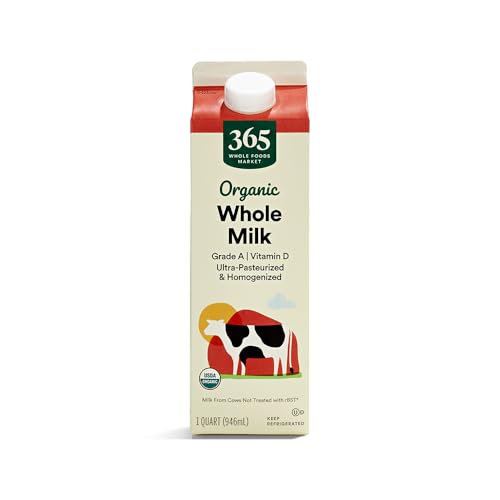
- 1 cup whole milk
- 1 egg, room temperature
- 2 teaspoons (8 grams) instant yeast
- 3 cups (420 grams) all purpose flour
- 1/3 cup (67 grams) granulated sugar
- 2 tablespoons (30 grams) salted butter
For Layering
- 11 tablespoons of salted butter, at room temperature
Egg Wash
- 1 egg yolk
- 2 tablespoons heavy cream
Instructions
- Take the milk, egg and butter out of the fridge. Slice the butter into pieces, 1 tablespoon each. Let all of this get to room temperature, about 1 hour out of the fridge.
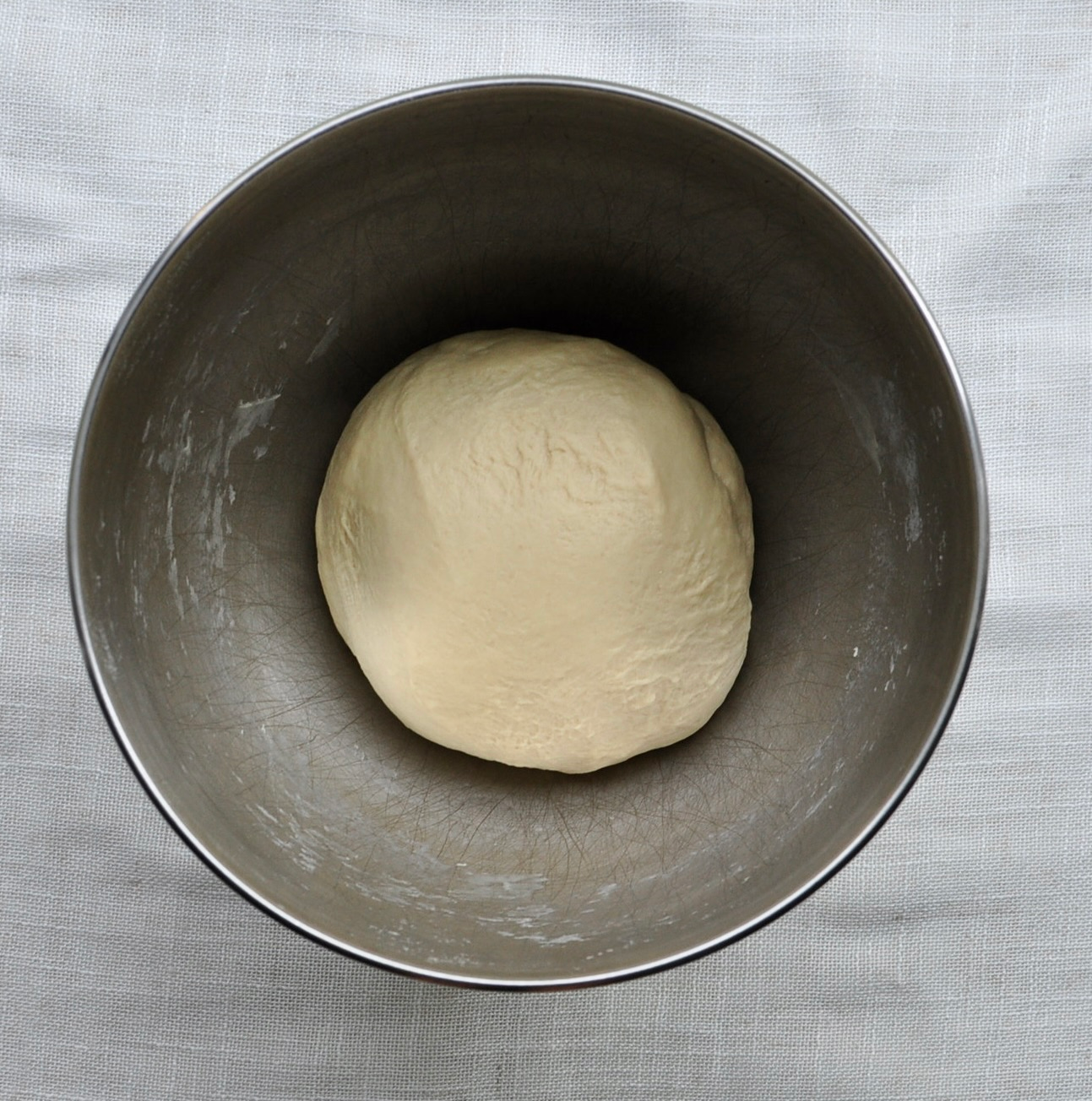
- In the bowl of your stand mixer, combine the milk, egg, yeast, flour, sugar and 2 tablespoons of butter. With the dough hook attachment on, mix and knead for 7 minutes on medium-low speed. After 7 minutes, the dough will look smooth and not sticky.
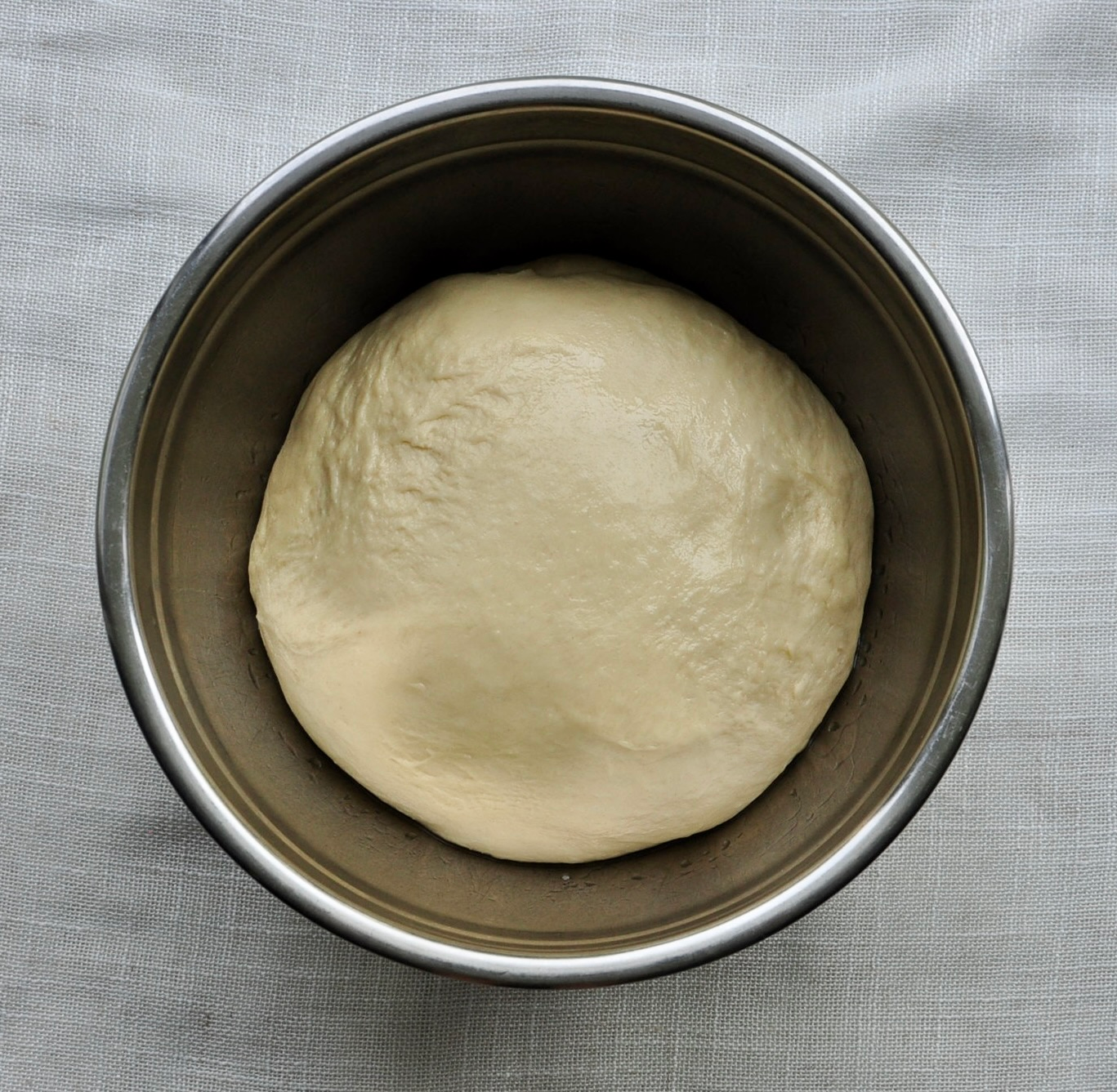
- Grease a medium bowl. Place the dough ball in the bowl and roll it around to cover the surface with the oil from the greased bowl. Cover and let that rest for 30 minutes.
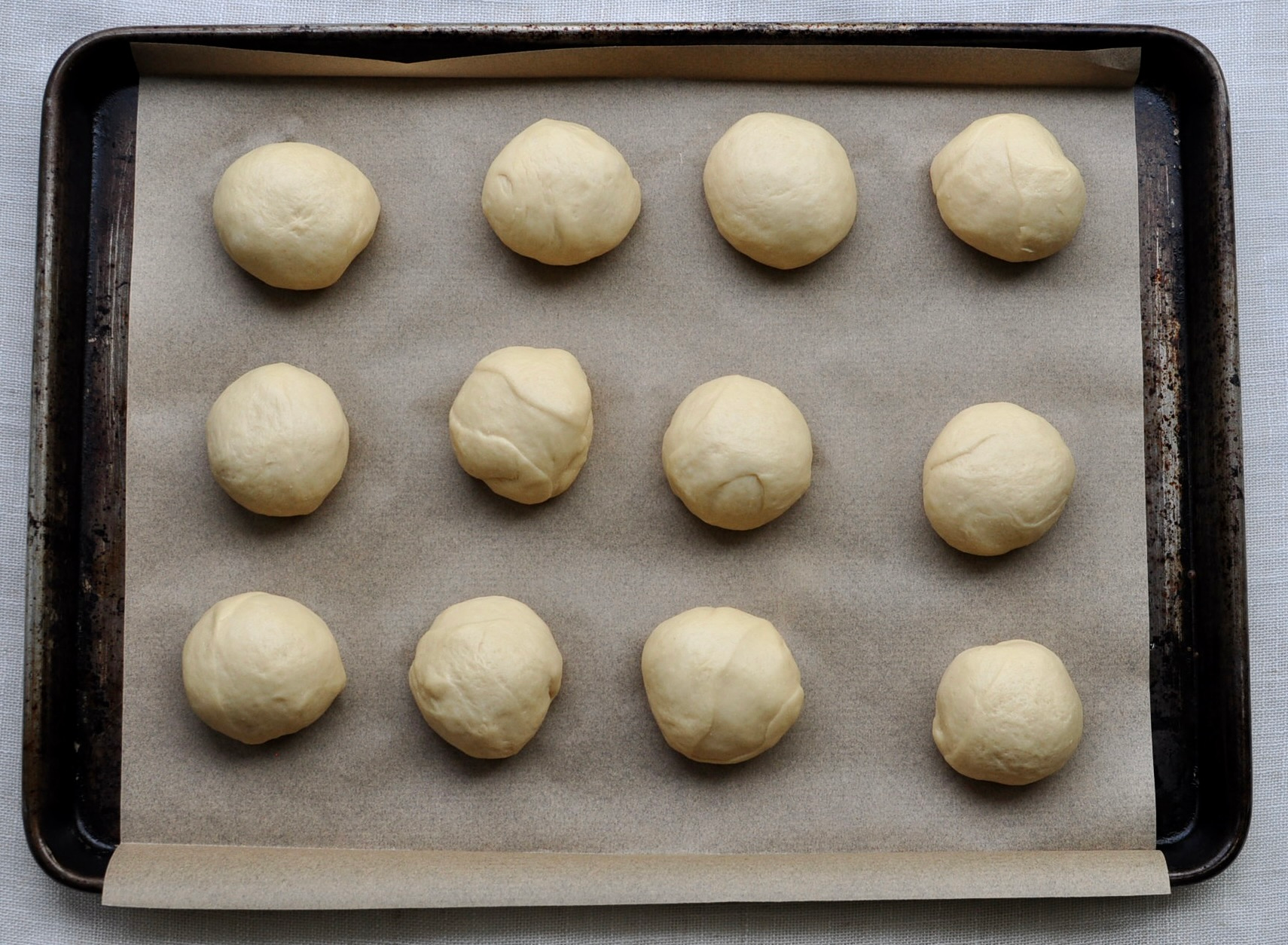
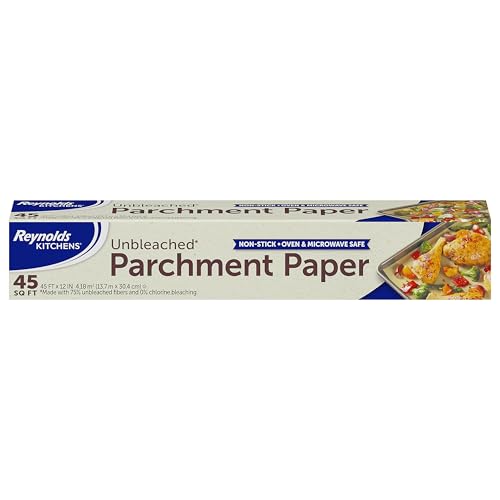
- Divide the dough into 12 equal portions. My dough weighed 800 grams so I made each portion to be about 67 grams each. Shaped each dough into a ball, place them on a parchment lined baking sheet and cover with a towel as you work on each individual dough piece.
- Prepare a clean work surface to roll out your dough. Roll each dough ball into a 7 inch round disc while keeping the thickness of the disc even throughout. Spread 1 tablespoon of butter evenly over the dough.
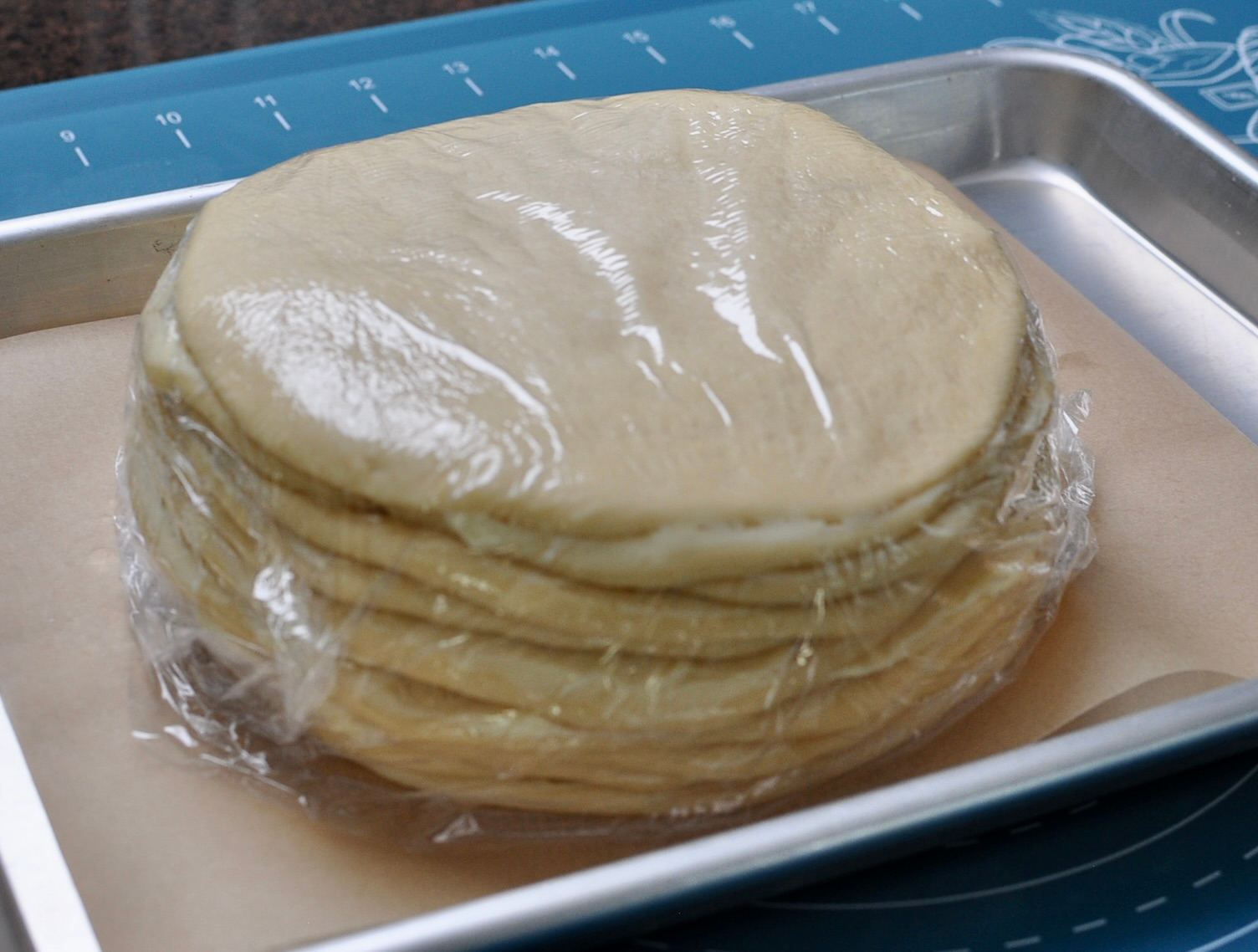
- Repeat for the remaining dough balls. Roll them into 7 inch discs and spread 1 tablespoon of butter on top of each disc. Stack them on top of each other as you go. For the last dough ball, roll it out but do not butter. This will be the top most layer of the stack. Wrap the stack of butter dough in saran wrap and chill in the freezer for 45 minutes.
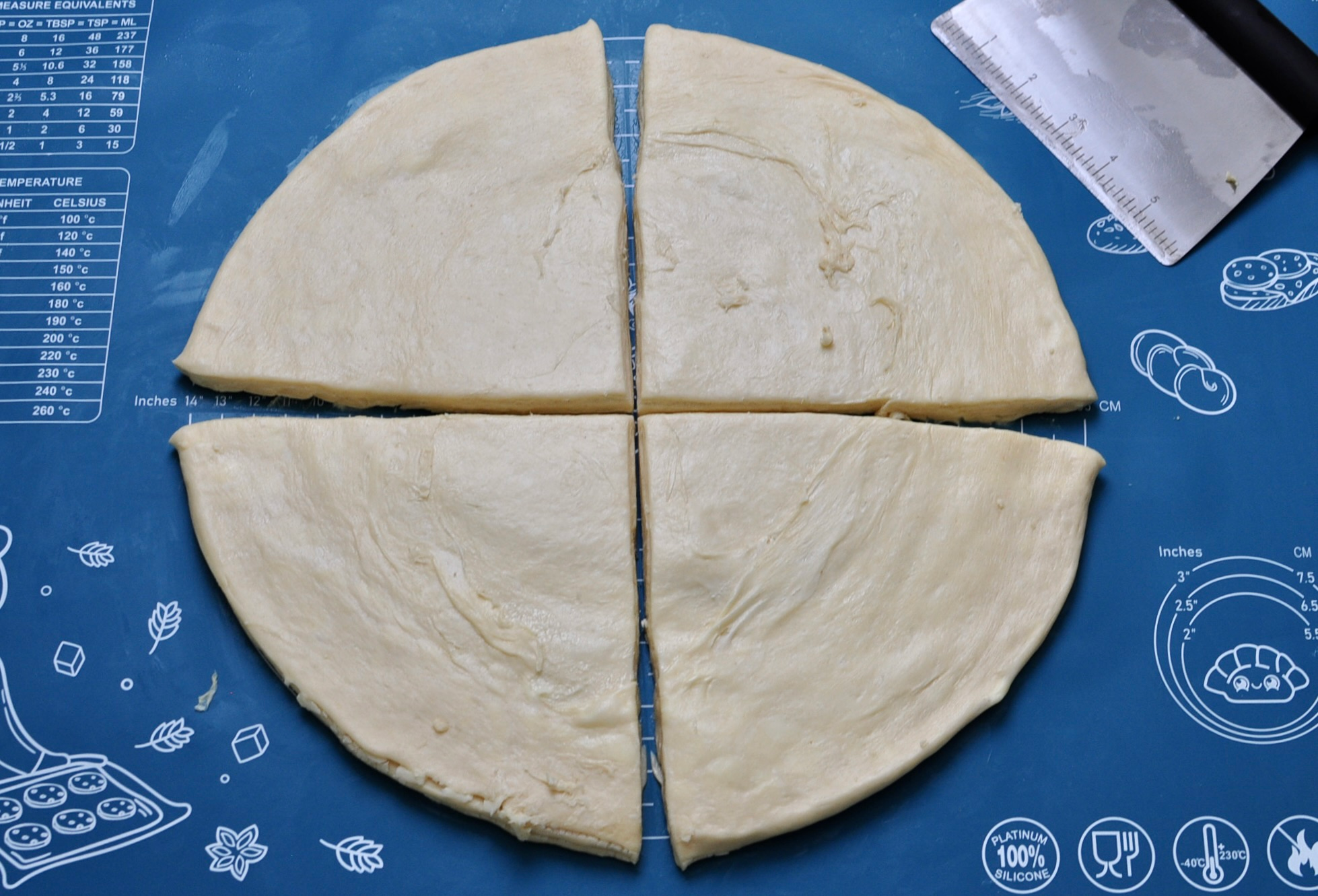
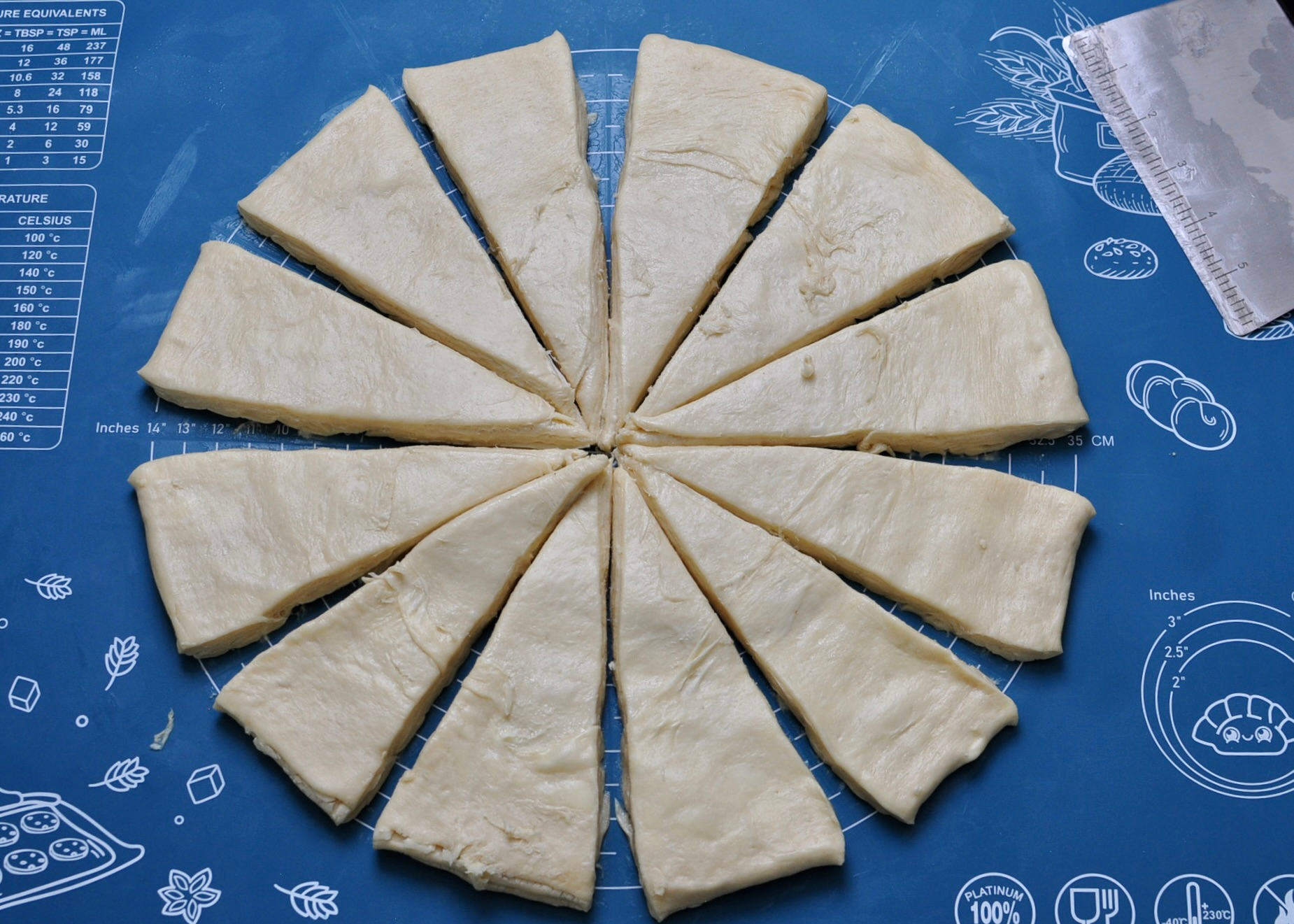
- After chilling, remove the saran wrap and roll out the stacked dough layers into a ~14 inch round disc. Start the rolling pin from the center of the disc and work your way outwards. Flip the stack over and keep rolling the dough, starting from the center, rolling outwards. By flipping the dough, this will help the edges roll out evenly. Flip the dough 5 or 6 times until the dough reaches 14 inches wide. Cut the rolled out disc evenly in quarters, slicing directly down the middle vertically and horizontally. You will have 4 equal triangles. Slice each triangle into 3 equal parts. This will create 12 equal triangle pieces. Each triangle piece will form 1 croissant.
- Starting from the base of the triangle (the rounded edge part), roll each triangle into a croissant shape. Place them on to a parchment lined baking sheet at least 2 inches apart. Use two baking sheets if you need to. Cover with saran wrap and let that rise for 3 hours.
- 15 minutes before the end of the 3 hour rise, preheat your oven. For a more tender croissant, set the heat to 375°F. For a deeper golden brown, crispy, flaky croissant, set the heat to 375°F on convection bake.
- Whisk together an egg yolk and heavy cream for the wash. Brush them over the croissants.
- For the tender croissants baked at 375°F, bake for 20 to 23 minutes. For the deeply golden, crispy croissants bake at 375°F on convection bake for 15 minutes. Immediately remove the croissants from the baking sheet and cool on a wire rack for at least 10 minutes before serving.
Nutrition
- Serving Size: 1 croissant
- Calories: 327 kcal
- Sugar: 7 g
- Sodium: 146 mg
- Fat: 19 g
- Saturated Fat: 12 g
- Unsaturated Fat: 6 g
- Trans Fat: 1 g
- Carbohydrates: 34 g
- Fiber: 1 g
- Protein: 6 g
- Cholesterol: 79 mg
❓ FAQ’s for Easy, Flaky Cheater’s Croissant
They’re real croissants with a real shortcut. It’s not a no-effort recipe. It’s just a little bit easier to make than the traditional method of folding cold dough and freezing butter. You get the flaky layers, the buttery pull-apart interior, and the golden shatter — just without three days of scheduled dough folds and monitoring the butter temperature. Purists may clutch their pearls. Let them clutch.
Because we’re not laminating in the traditional sense. Instead of trapping a cold butter block inside dough (which requires temperature control so the butter doesn’t melt into the dough), we spread soft butter between twelve already-separated dough rounds. The layers are built by stacking, not folding — so warm butter is a feature, not a failure.
Yes, just add about 1/4 teaspoon of salt per stick to keep the flavor balanced. You can add the salt to the dough before kneading. Both ways of adding salt are fine.
You can, and you’ll get a slightly chewier, sturdier croissant. All-purpose gives a more tender, delicate crumb — which is what I’m after here.
Twelve is the sweet spot for layer count versus effort. Fewer rounds means chunkier, more biscuit-like layers. More rounds means you’ll be rolling dough until you question your choices. Twelve it is.
Not at all. A little butter escaping is normal and honestly delicious. Just gently pull the top dough layer over the escaped butter to seal the butter in. Roll from the center outward with even pressure.
You’ll see visible layers separating and the croissants will look noticeably puffed and jiggly when you nudge the pan. If they still look tight and compact, give them more time — warmth is your friend here.
Yes. You can refrigerate the shaped croissants overnight and let them come to room temperature and finish rising in the morning. Fresh croissants with your morning coffee is a legitimate life goal.
Absolutely. Freeze them shaped and unbaked, then thaw and let rise before baking. Baked croissants also freeze well — reheat at 325°F for 5–8 minutes to bring the crisp back.
Usual suspects: butter was too melted, rounds were rolled unevenly, or the dough was under-proofed. Soft-but-not-liquid butter and a patient rise fix 90% of flakiness problems.
Best the day they’re baked, good for two days in a paper bag at room temperature. Refresh in a hot oven for a few minutes and nobody will know they weren’t born that morning.
SHOP FOR THIS RECIPE





 Strawberry Mochi Squares
 Easy Blanched Shanghai Bok Choy
 Strawberry Chia Seed Jam
 Matcha Mochi Squares
 Pan-Seared Oven-Finished Duck Breasts
 Counter Culture: What to Keep Out of Your Fridge
 Banana Protein Muffins
 Blueberry Chia Seed Jam
 Chocolate Cupcakes
 Vanilla Cupcakes