
This post contains affiliate links. As an Amazon Associate, I earn from qualifying purchases.
Nutella & Cookie Butter Croissant Babka Made with Cheater’s Croissant Dough

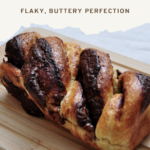
Somewhere between a croissant’s flaky, buttery layers and a babka’s swoon-worthy swirl, a beautiful carbohydrate hybrid was born: Croissant Babka. And friends, once you make it, there’s no going back.
The Secret Weapon — Cheater’s Croissant Dough
This recipe leans on a genius hack I’ve made at least 20 times: a “cheater’s” croissant dough that gives you all the lamination magic (hello, buttery flaky layers) without the multi-day fold-and-chill marathon of classic croissant dough. I originally fell down this rabbit hole thanks to Alexandra’s Kitchen (ALEXANDRACOOKS) — I’ve used this dough for everything from ube croissants to cinnamon rolls, but babka is where it truly shines.
Why Croissant Dough Makes the Best Babka
Traditional babka dough is enriched and soft. This version swaps in croissant dough instead, meaning every slice reveals flaky layers hugging ribbons of melty Nutella. It’s basically what would happen if a croissant and a babka fell in love at a bakery and had a very delicious baby.
Simple Ingredients, Show-stopping Results
You only need pantry staples — milk, egg, all-purpose flour, instant yeast, sugar, and salted butter — to build this “laminated” dough from scratch. No pastry school diploma required.

Customize Your Swirl
While Nutella is the star here, this dough is endlessly adaptable. Swap in melted chocolate, cinnamon-sugar, or cookie butter for a whole new flavor experience. Once you’ve mastered the base dough, the swirl possibilities are basically limitless.
You might also like these recipes…

Vanilla Chip Malted Muffins
Why let chocolate chips have all the fun? These Vanilla Chip Malted Muffins are moist, elegant, and perfectly balanced. With a dreamy hint of malt to bring out the rich vanilla flavors, they are the sophisticated, not-too-sweet treat your mornings have been missing.

Chocolate Nutella Babka and Cookie Butter Babka
Swirls of decadent chocolate and nutella in a babka recipe inspired by Breads Bakery in New York.
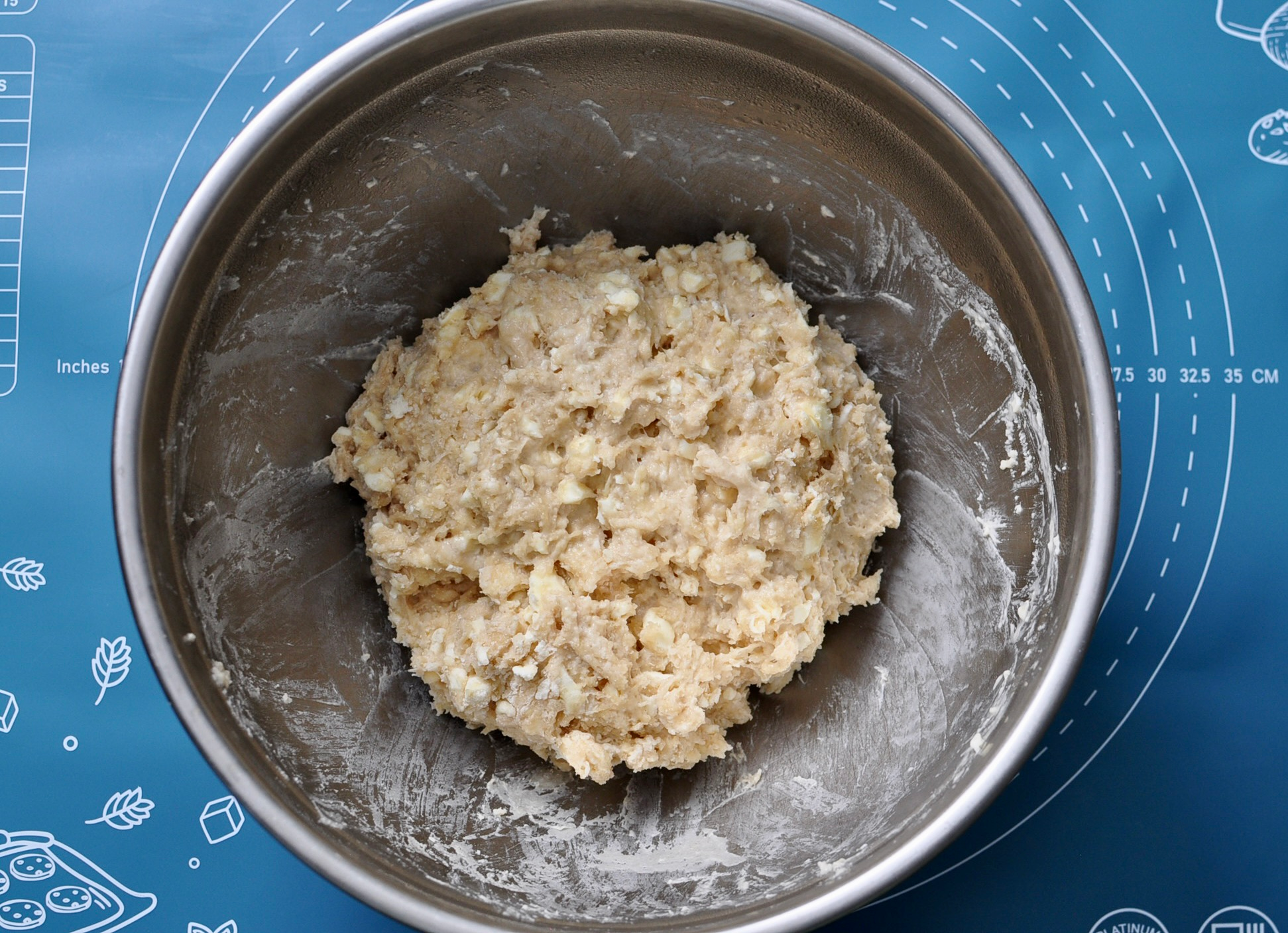
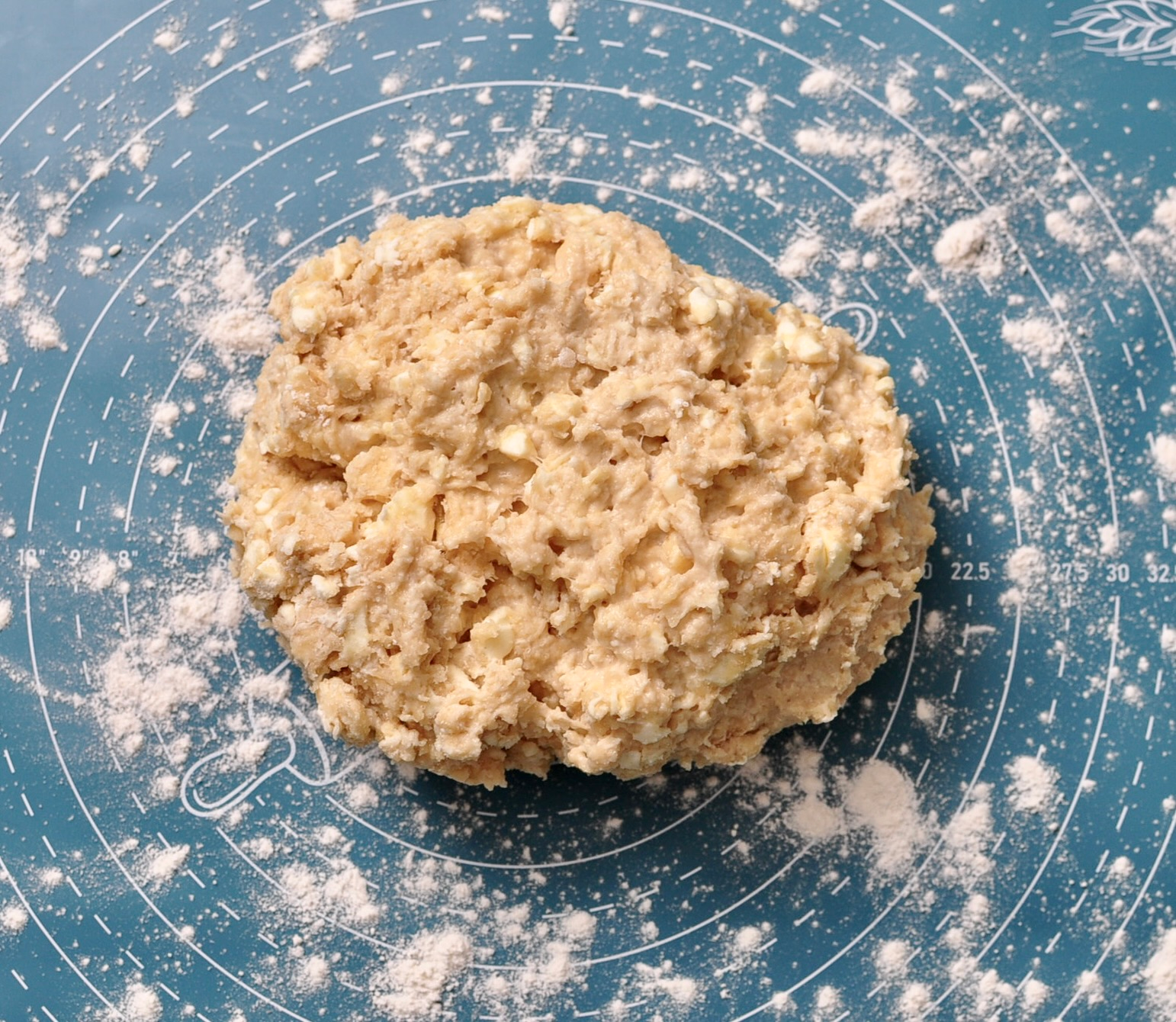
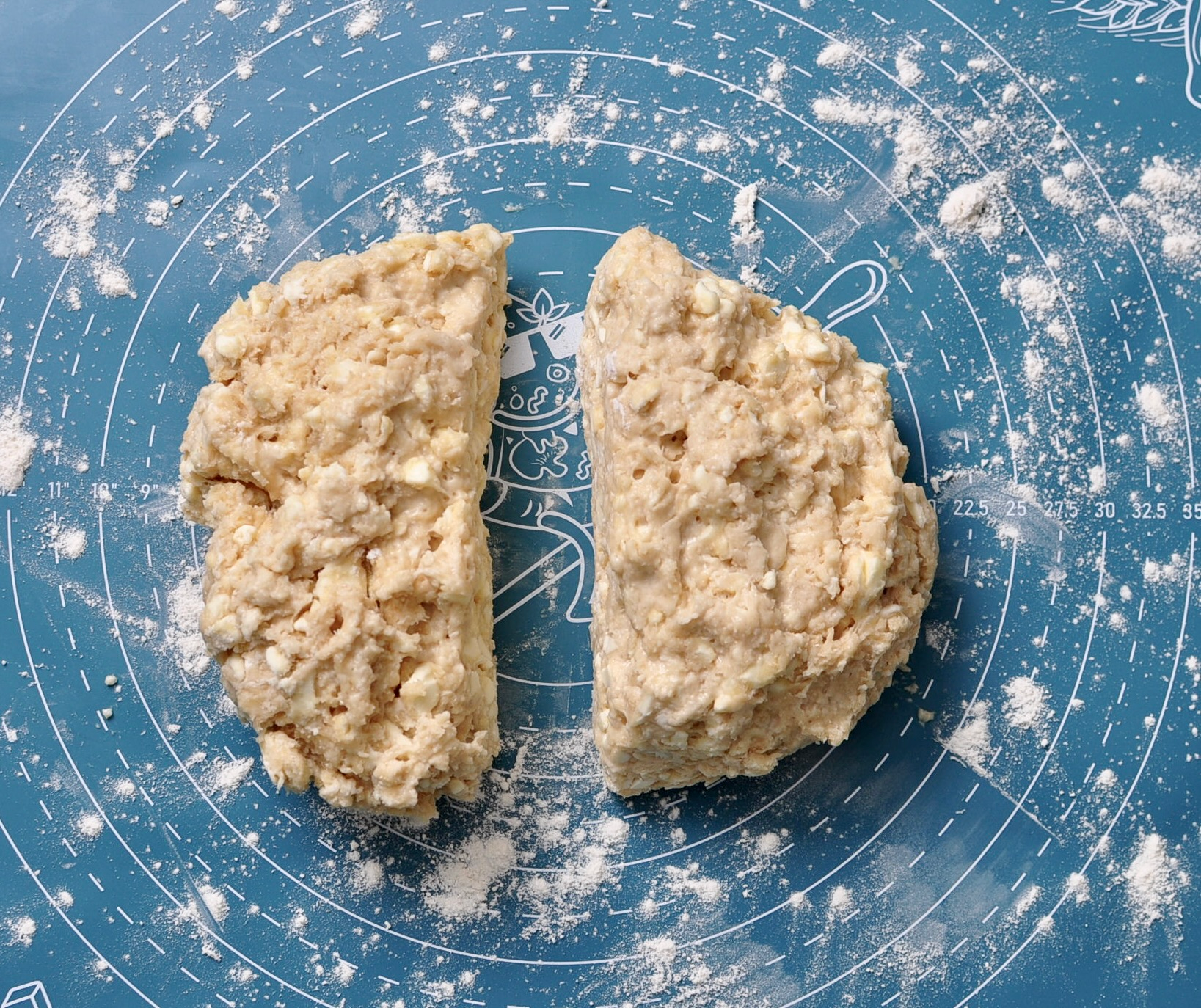
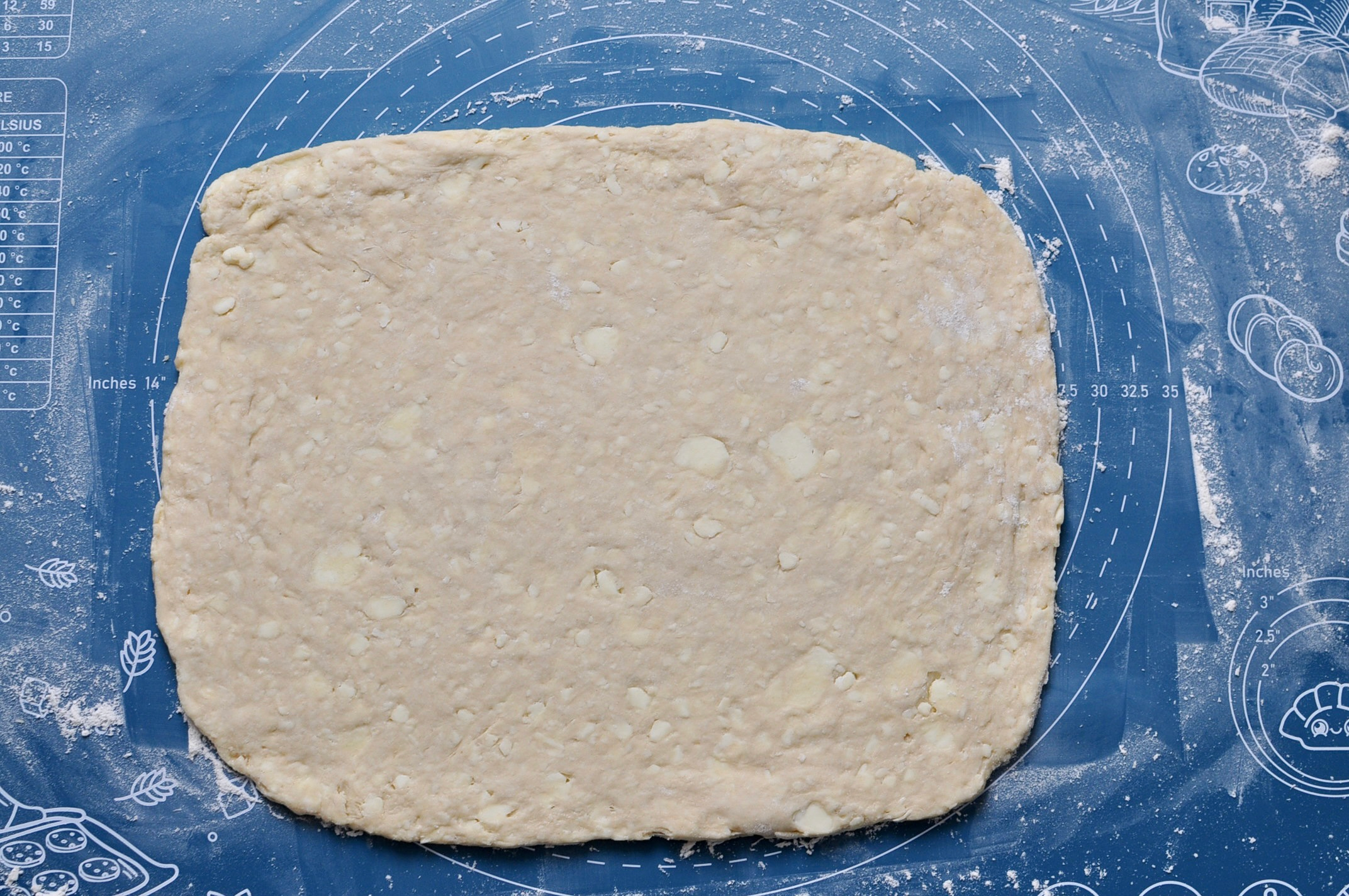
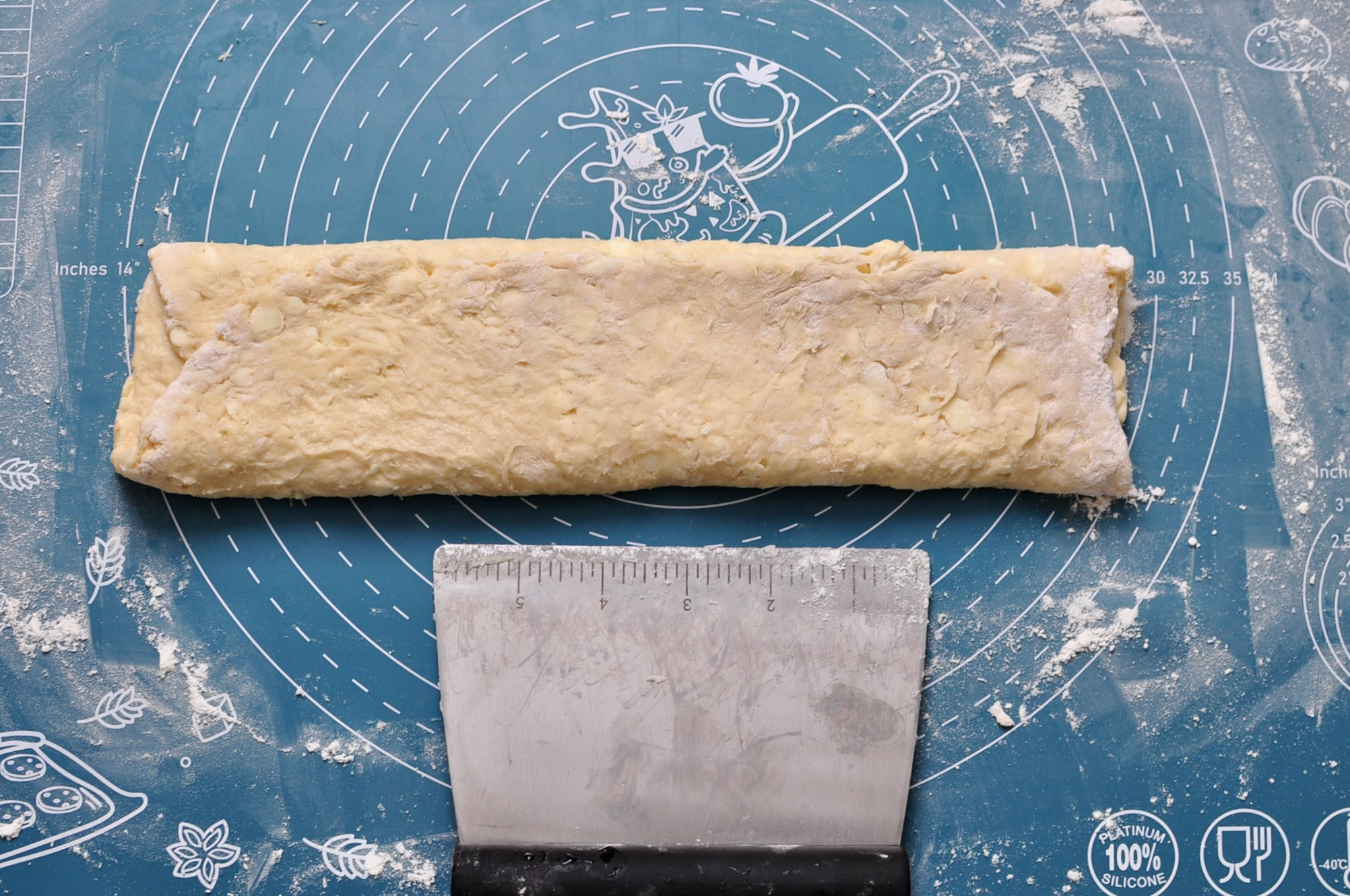
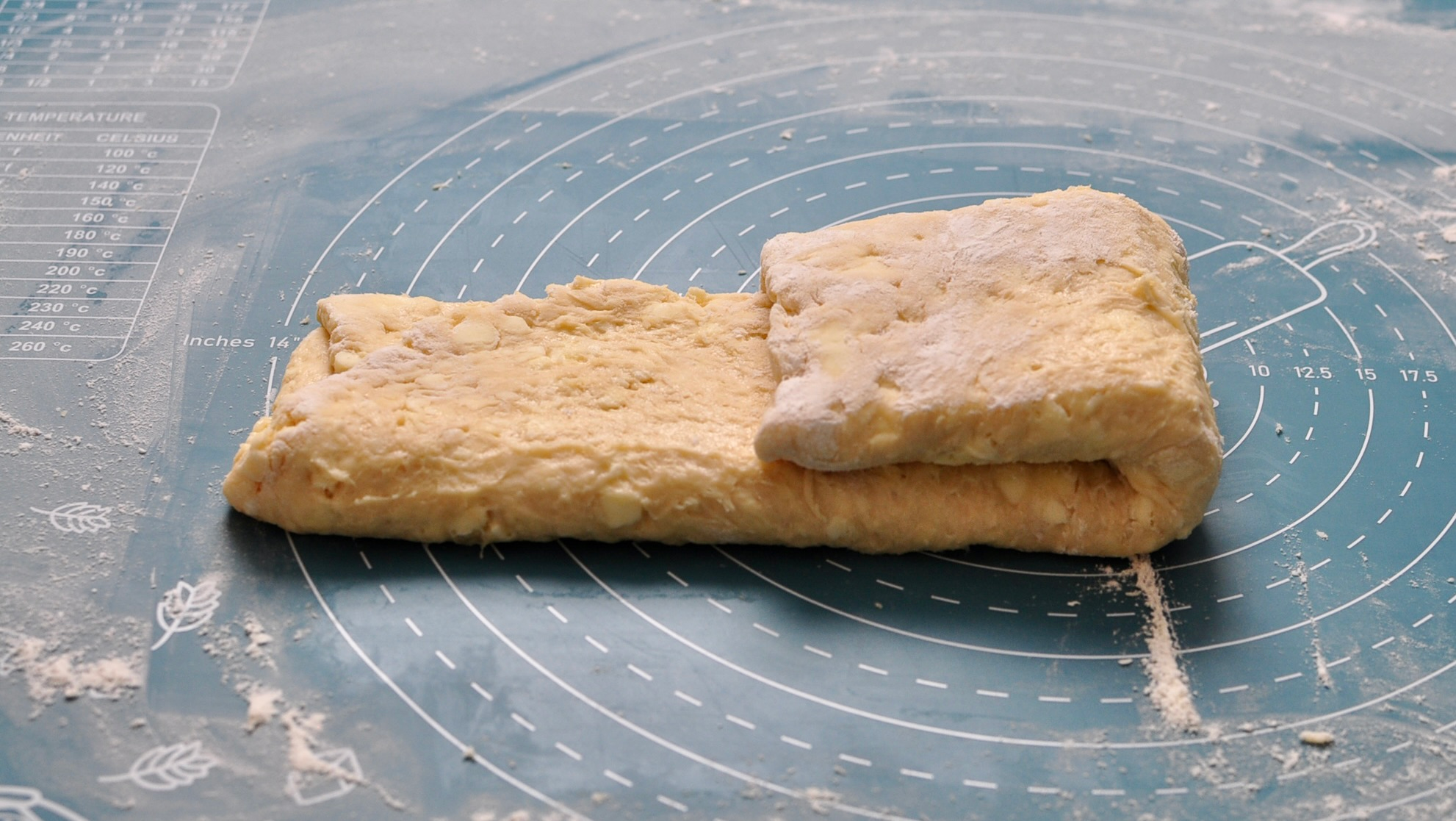
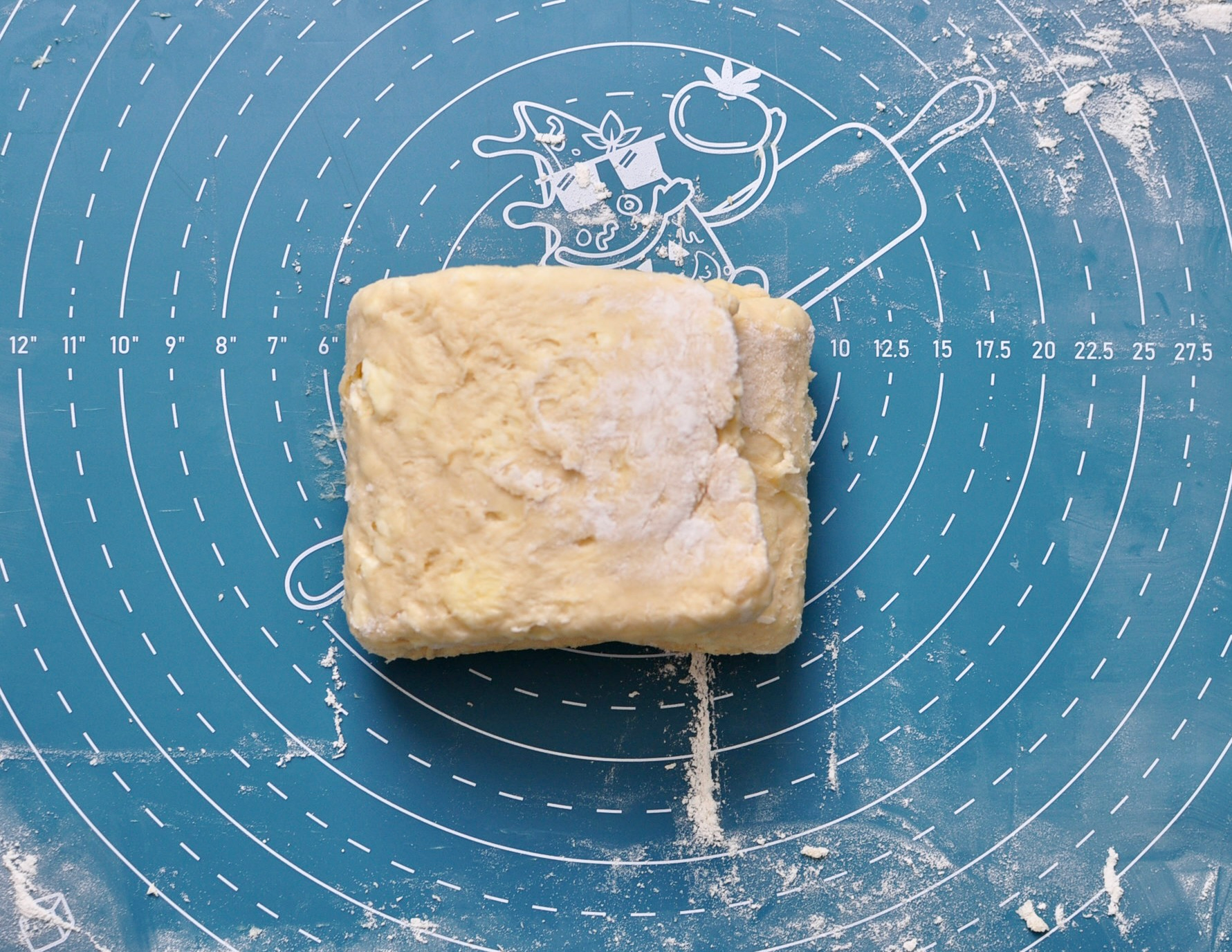
Visual Step-by-Step Guide for Making Croissant Babka:





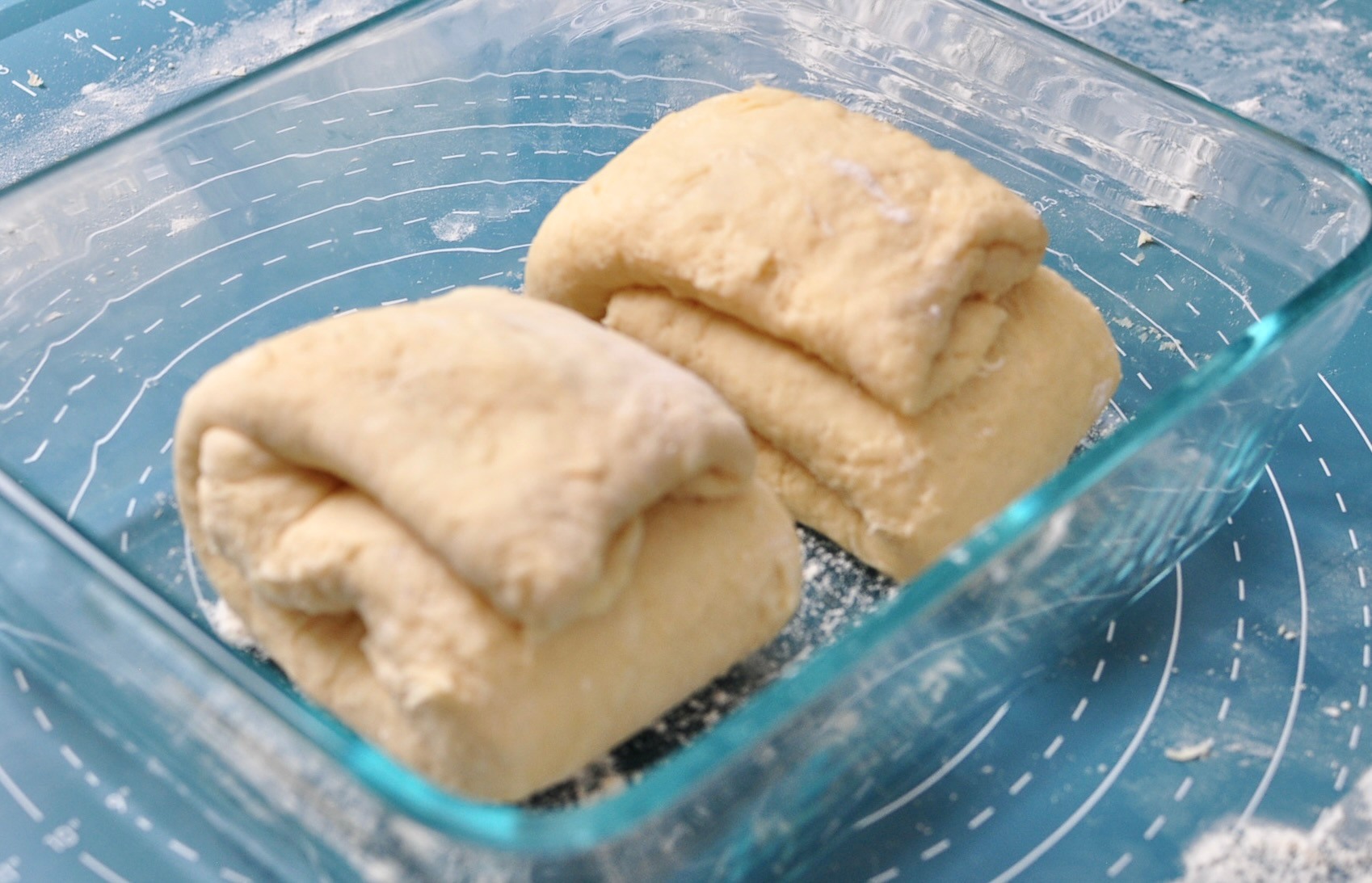
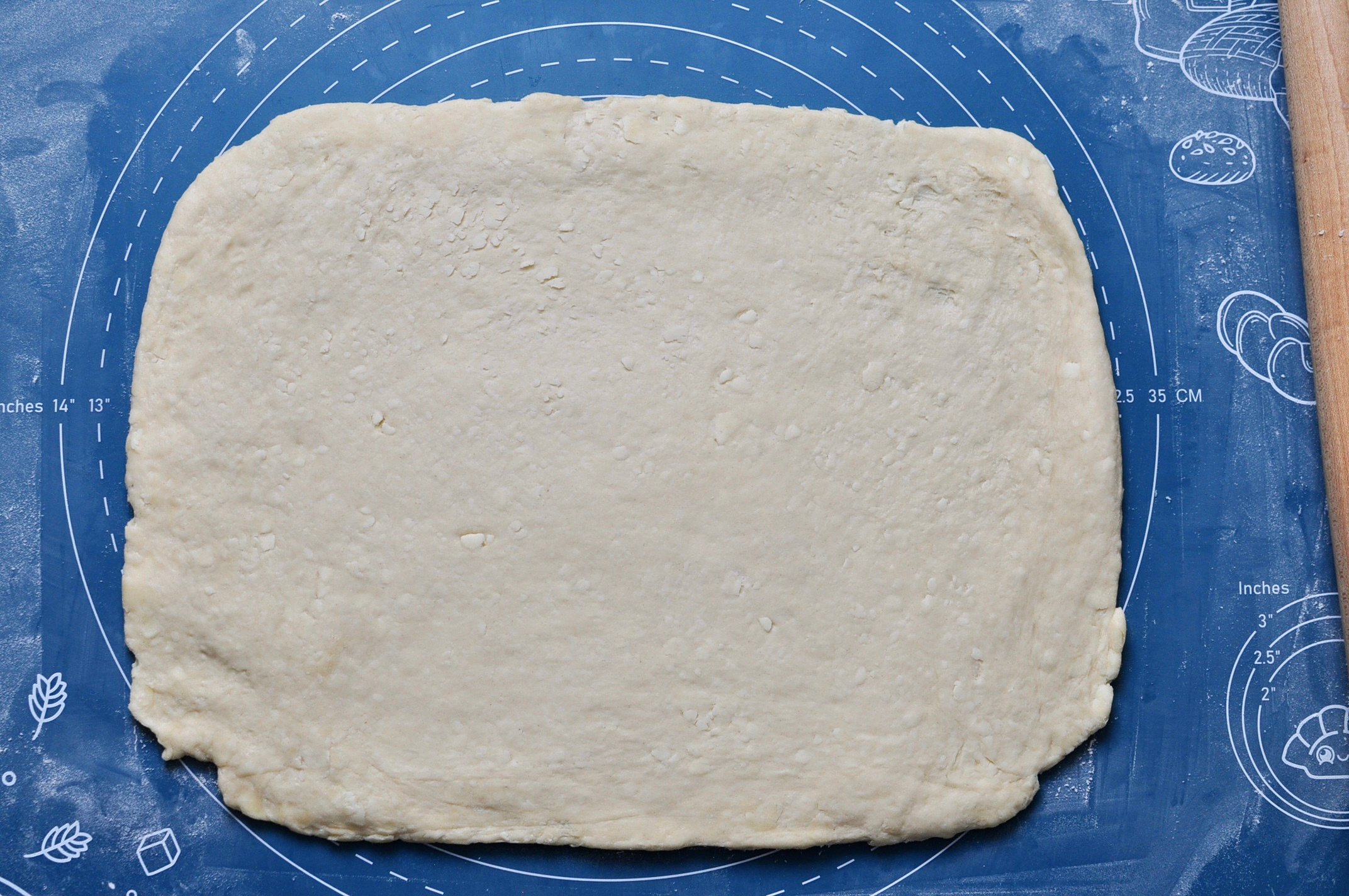
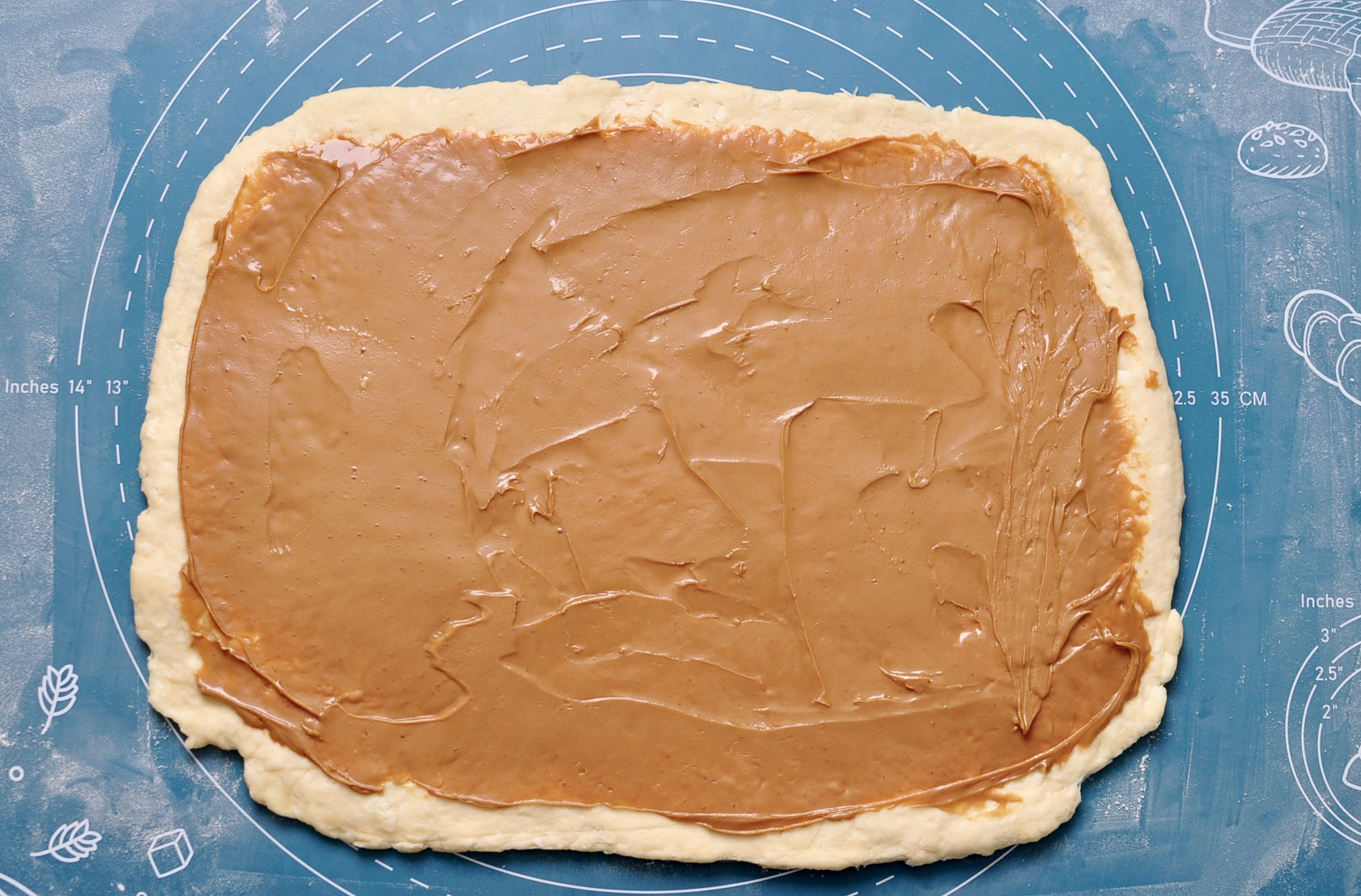
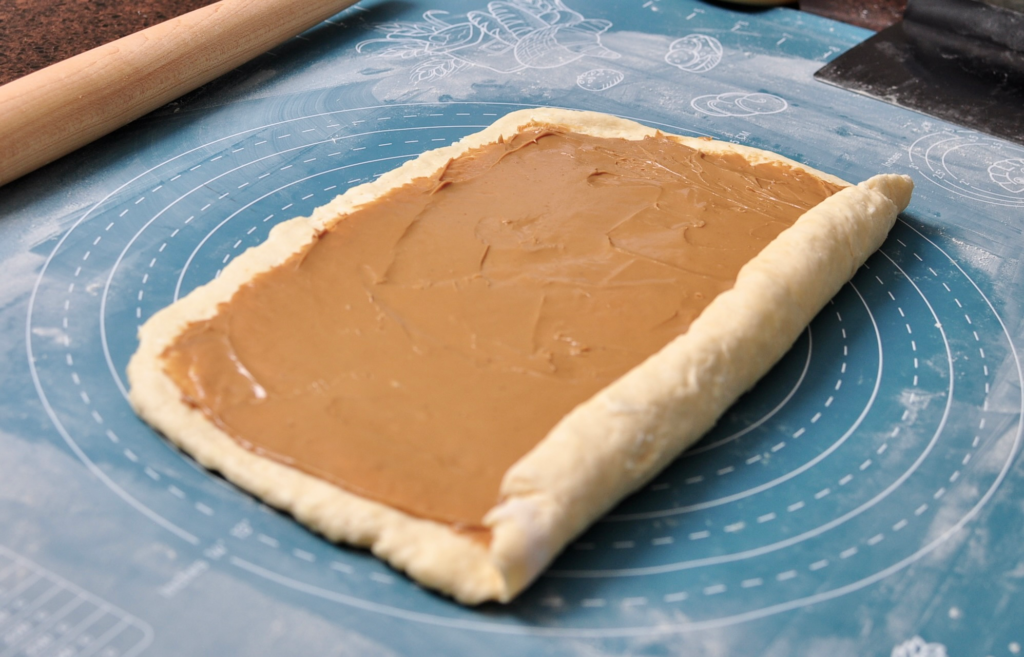









Croissant Babka

Flaky, buttery cheater’s croissant dough rolled around ribbons of Nutella and Cookie Butter, then baked into a golden, flaky, swirl-packed loaf. This Croissant Babka delivers all the drama of laminated pastry with none of the complicated work.
- Prep Time: 45 minutes (includes active folding, rolling and braiding)
- Cook Time: 26 minutes
- Total Time: 6 hours 11 minutes (includes first and second chill + 2 hours proofing)
- Yield: 12 servings (2 loaves, 6 slices per loaf) 1x
- Category: Bread, Breakfast, Dessert
- Method: Baking
- Cuisine: French
- Diet: Vegetarian
Ingredients
- 1/4 cup (60 grams) water
- 1/2 cup (125 grams) whole milk
- 1 large egg
- 2 1/4 cups (286 grams) all-purpose flour, plus more for dusting
- 2 teaspoons (7 grams) instant yeast
- 2 tablespoons (30 grams) granulated sugar
- 1 cup (227 grams) of salted butter, cut into cubes (approx 1/4 teaspoon each), cold
Filling
- 1/2 cup (~150 grams) per babka: Nutella, cookie butter, melted chocolate callets, peanut butter, or black sesame paste
Egg Wash
- 1 egg
- 2 tablespoons heavy cream
Instructions
- In a medium bowl, whisk the water, milk and egg together. Set aside.
- In a food processor, add the flour, yeast and sugar. Pulse 2 times, about 1 second each. Add the cold butter and pulse 10 times, about 1 second each time. The butter should be in pea-sized pieces. Transfer the flour mixture to the water/milk/egg mixture. With a silicone spatula, stir until just combined. You will have sticky, wet dough. Cover the bowl and refrigerate for at least 2 hours or up to 3 days.
- Lightly flour a clean work surface. The dough will weigh approximately 765 grams. Divide the dough in half, about 383 grams each. Set aside one while you work on the other piece of dough. Shape the dough into a square. With a floured rolling pin, roll the dough into a rectangle about 12″ wide x 10 high”. Using envelop style folds, fold the top third of the rectangle down. A bench scraper is helpful here to help you scrape the sticky dough cleanly off the your work surface, as the dough will be sticky. Then fold the bottom third of the dough up, covering the top half you just folded down. Then fold the right third of the dough from right to left, about 2/3 of the way. Then fold the left side of the dough, covering the right half you just folded. Now you have a square (give or take). Refer to the images above for visual clarification.
- Repeat the same fold 3 more times. Roll the dough into an approximate 12″ wide x 10″ high. Top down, bottom up, right to left and left to right. With each fold, the dough will become more smooth and after the last fold, there will be a lot less lumps of butter in the dough. Repeat this for the other half of the dough you set aside.
- Transfer both dough squares into a container and cover. Chill the dough in the fridge for at least 1 hour or up to 2 days.
- Prepare two loaf pans by lining them with parchment paper.
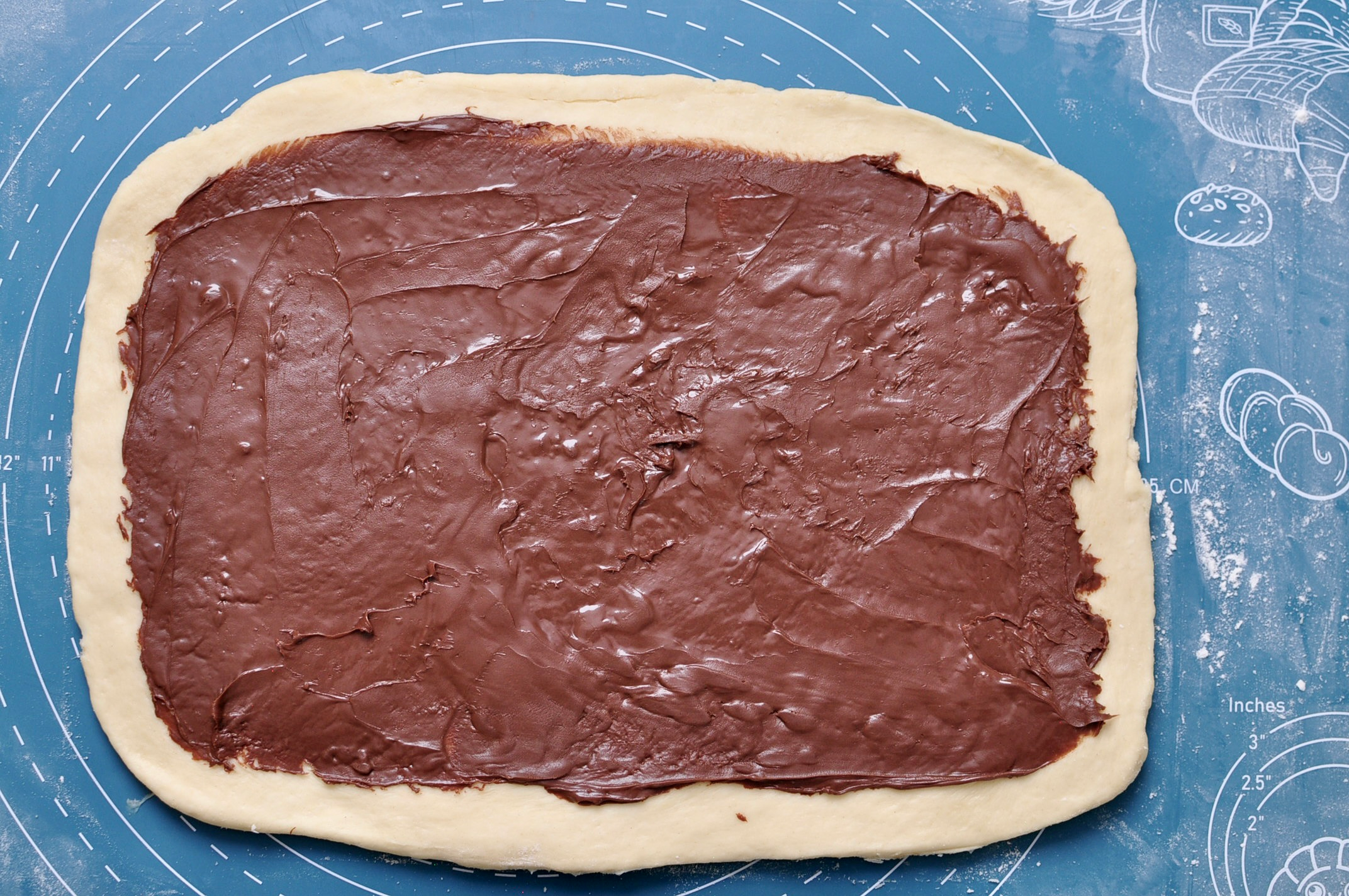
- On a clean and lightly floured work surface, roll the first piece of dough into a 12″ wide x 10″ high rectangle. Spread about 1/2 cup (150 grams) of Nutella (or another spread of your choice, in a thin layer over the rolled out dough, stopping about 1/2″ off all the edges.
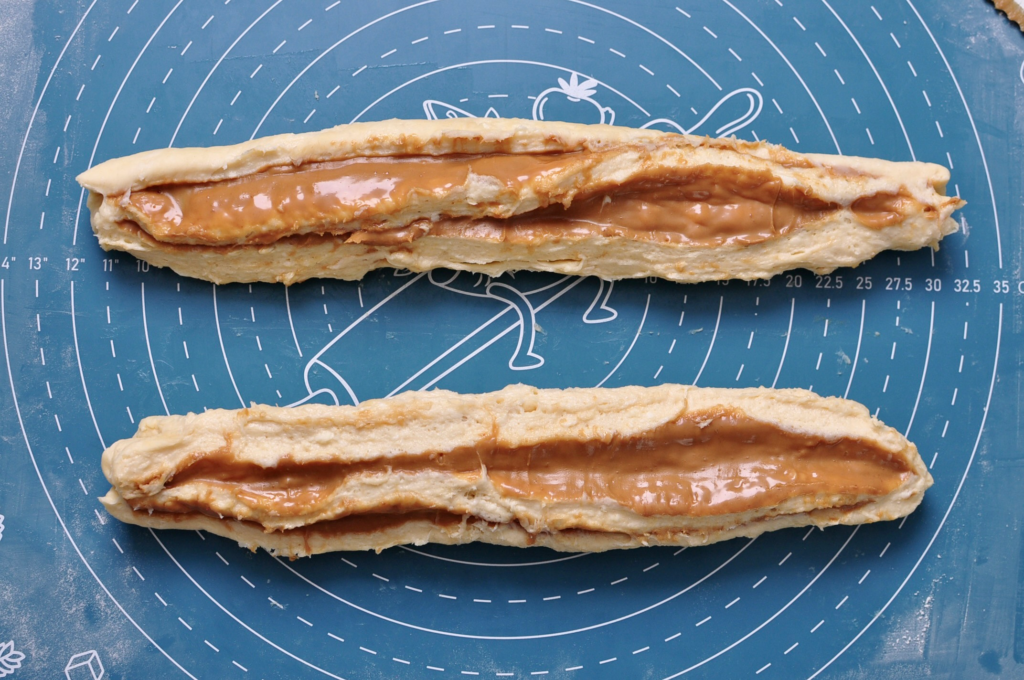
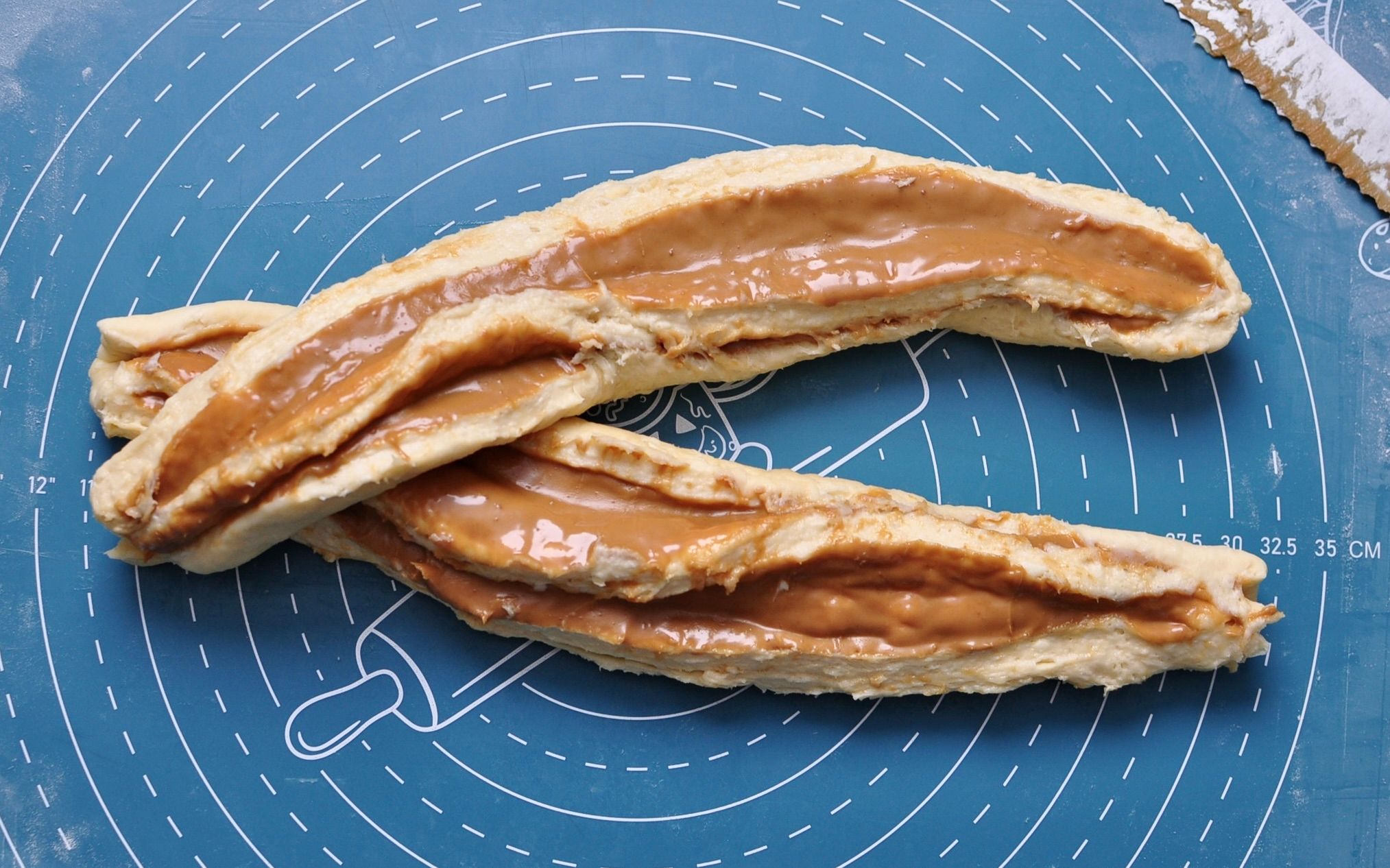
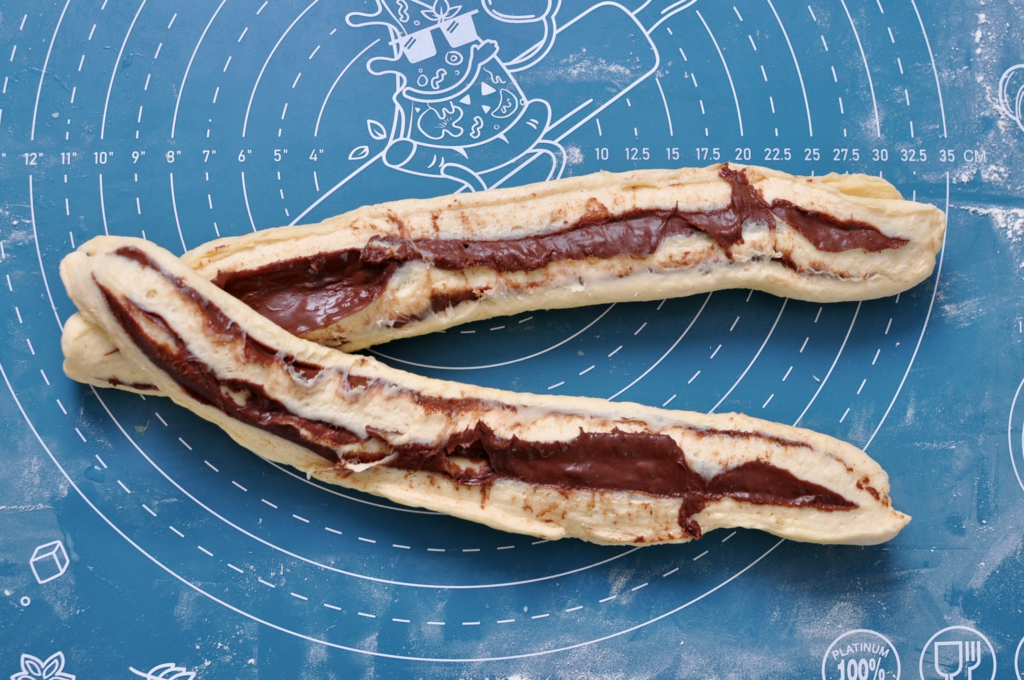
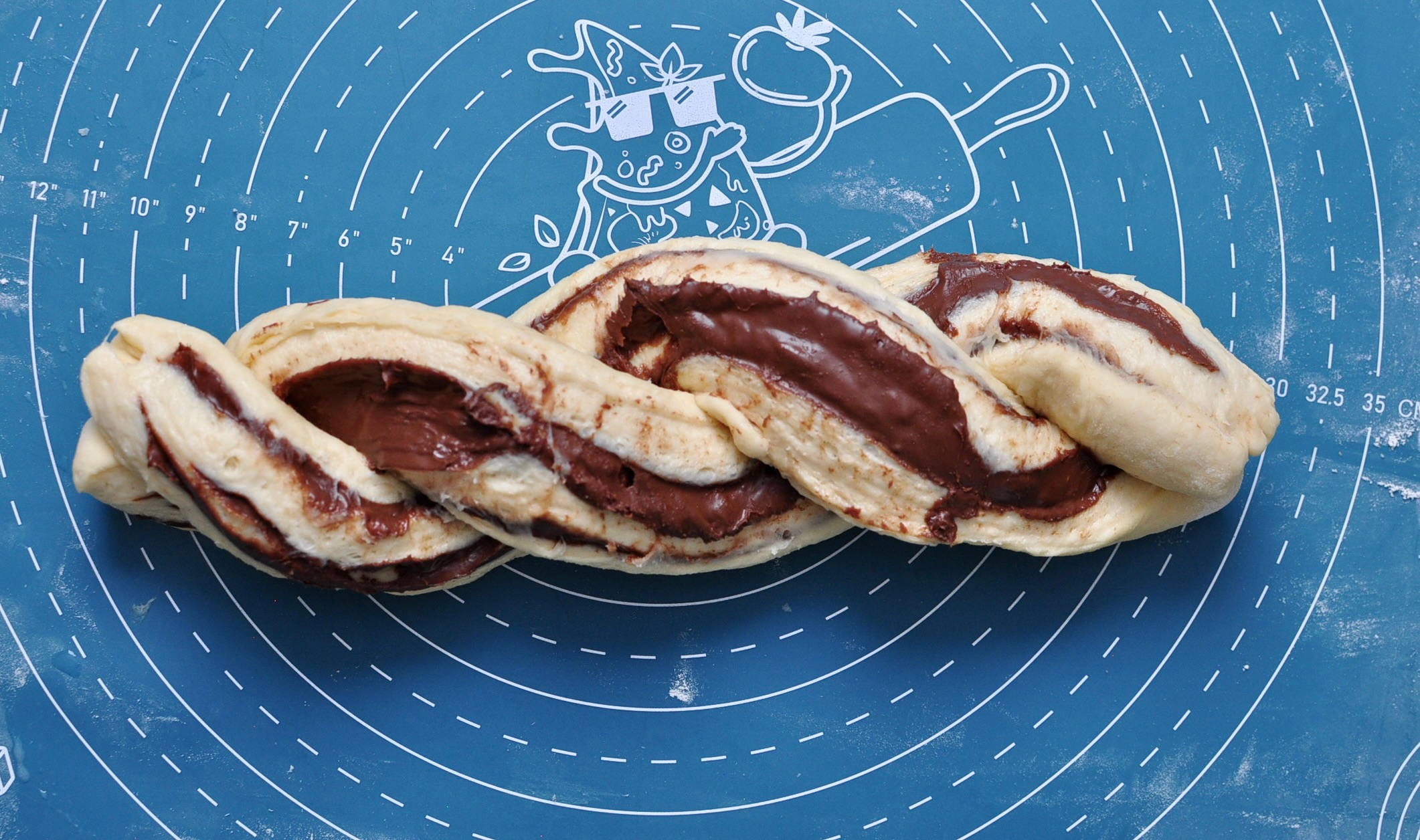
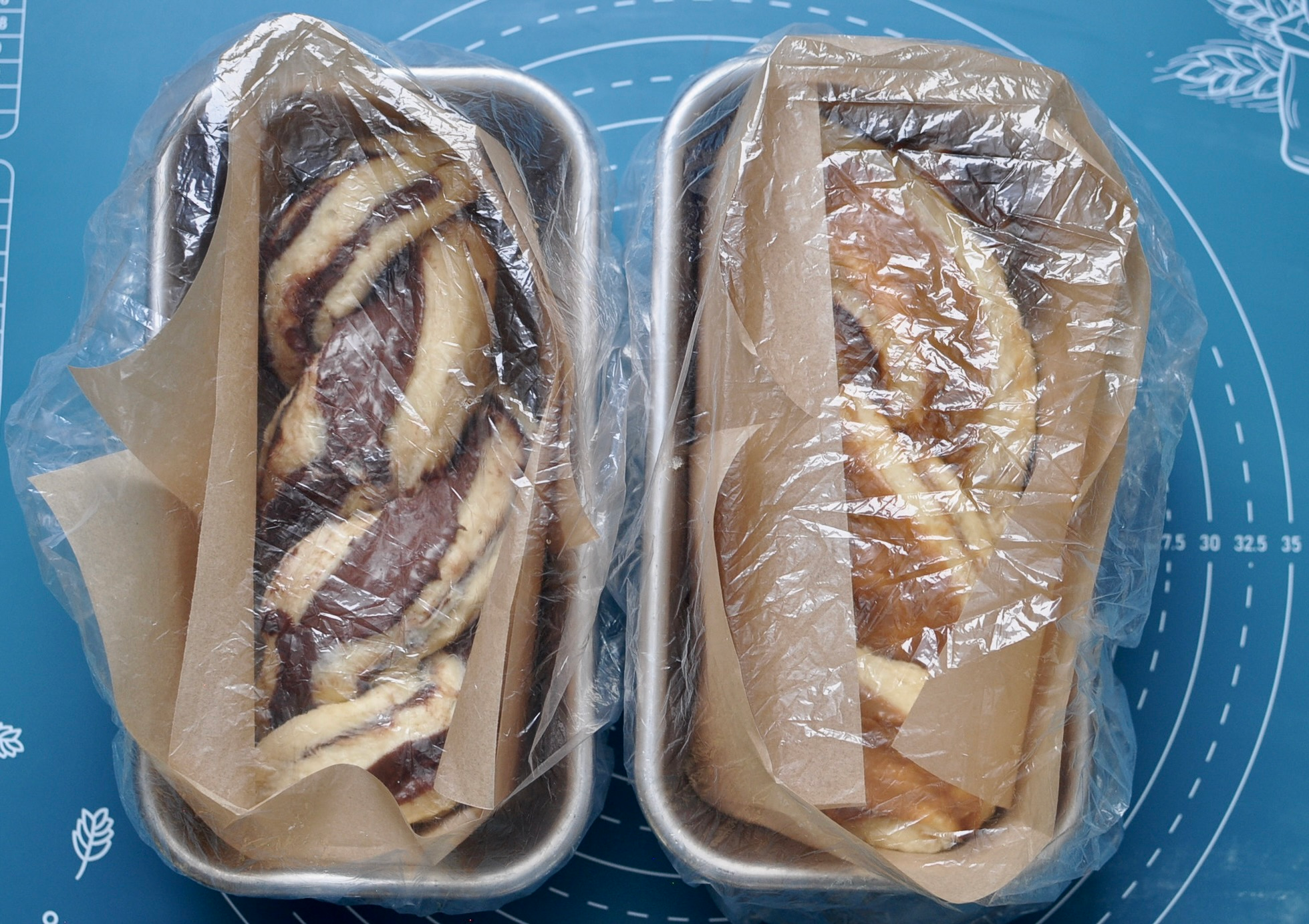
- Starting from the bottom, wider edge, roll the dough up into a log, careful to keep the dough tight as you roll. When you get to the end, pinch the edge of the dough into the log to smooth out the seam and roll it over so the seam is facing down. With a sharp knife, cut the log evenly in half, along the long side of the log. Arrange the two pieces so the cut side faces up and parallel to each other. Starting at one end, cross the two pieces, careful to keep the cut side facing up as you continue to cross them until you get to the other end. Carefully lift up your braided dough and place it into a loaf pan. Cover the dough with saran wrap. Repeat this for the other dough.
- Proof the croissant babkas at room temperature for about 2 hours or until doubled in size.
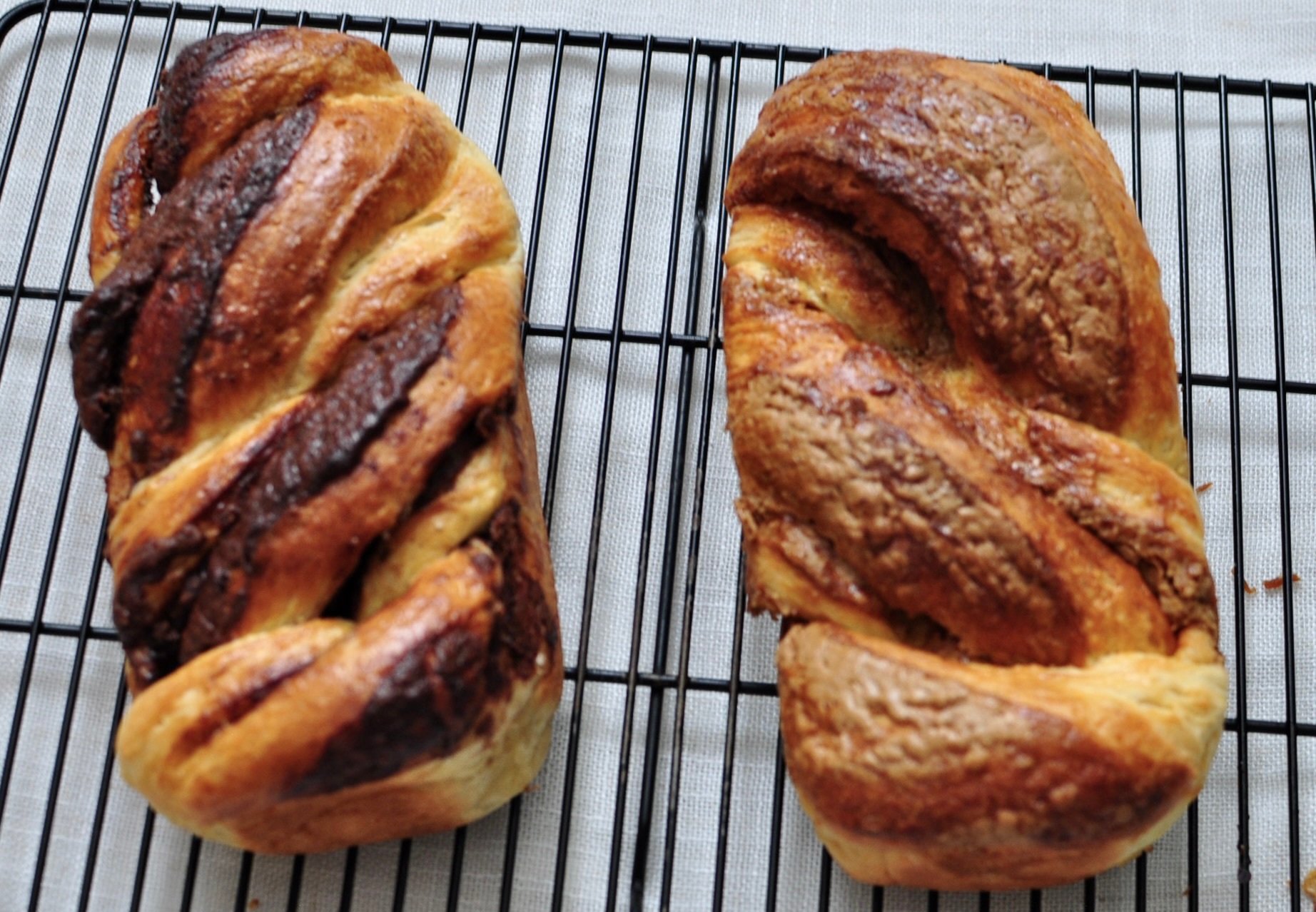
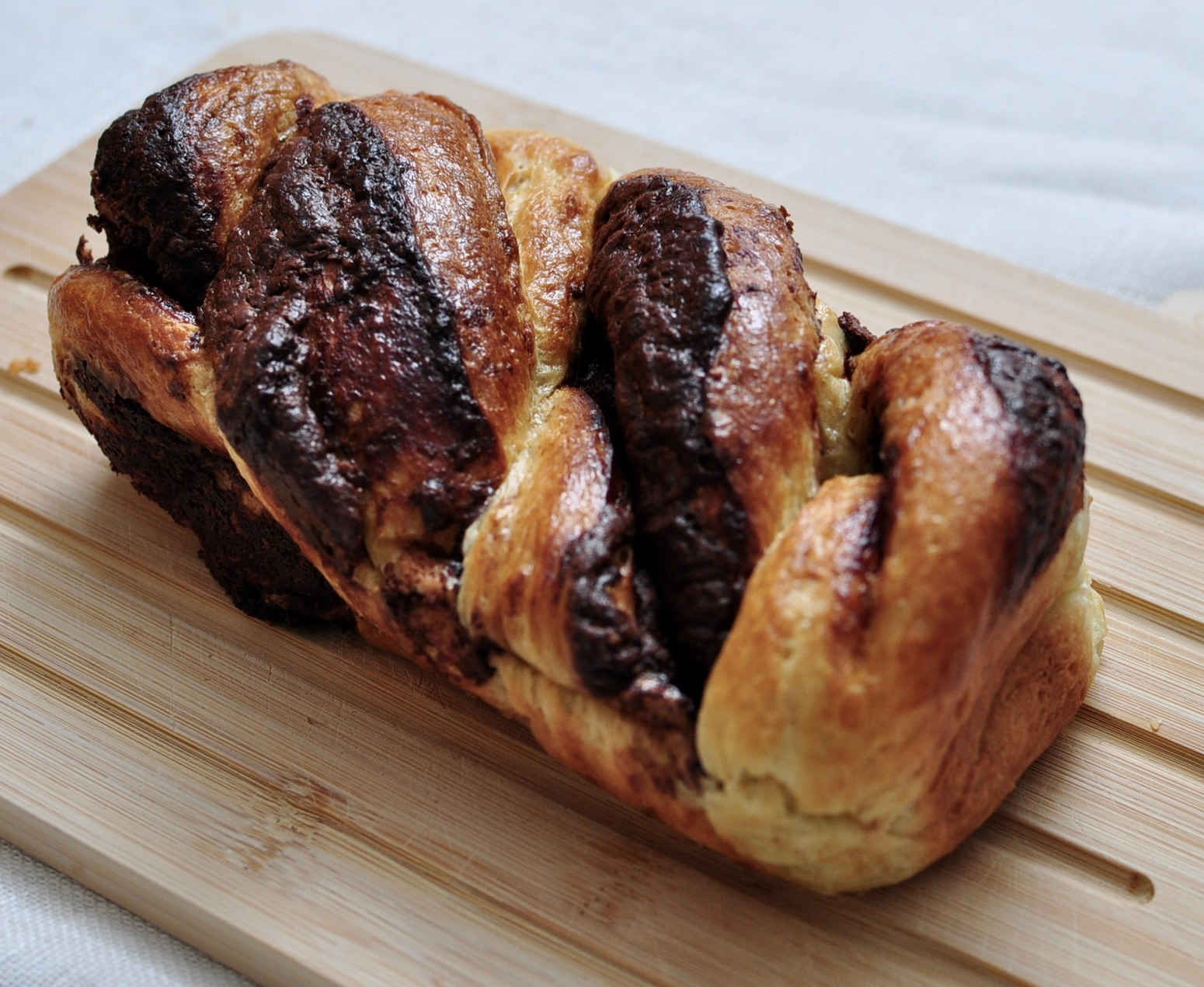
- Preheat your oven to 350°F on convection bake. Prepare the egg wash and brush it on over the babkas right before you place the loaves into the oven. Bake for 25 to 27 minutes. Watch the loaves in the oven towards the end of baking. If you prefer it to be a darker golden brown you can bake for an extra 1 to 2 minutes. Once you remove the croissant babkas from the oven, lift the loaves out of the pan by the parchment paper and cool on a wire rack for at least 15 minutes before slicing. Enjoy!
Nutrition
- Serving Size: 1 slice (6 slices per loaf)
- Calories: 394 kcal
- Sugar: 17 g
- Sodium: 150 mg
- Fat: 25 g
- Saturated Fat: 13 g
- Unsaturated Fat: 12 g
- Trans Fat: 0 g
- Carbohydrates: 37 g
- Fiber: 2 g
- Protein: 6 g
- Cholesterol: 76 g
❓ FAQ’s for Croissant Babka
Croissant babka is a swirled, twisted loaf made with croissant dough instead of traditional soft brioche dough. The result is flakier, crispier, and considerably harder to stop eating.
Nope. This recipe uses a cheater’s croissant dough that skips the classic butter-block lamination but still produces distinct, flaky layers. It’s the shortcut that doesn’t taste like a shortcut.
You can, and no one will call the pastry police. But the homemade cheater’s dough has better flavor and structure, and honestly it’s easier than its reputation suggests.
Yes. The dough benefits from an overnight fridge rest, and you can fold the dough, refrigerate it overnight, then roll it out and make the babka before baking.
Dark chocolate, cinnamon sugar, cookie butter, ube halaya, pistachio cream, shredded cheese or jam with a little almond paste. Avoid anything too wet — excess moisture turns flaky layers soggy. Since this recipe makes two loaves I usually do two different fillings.
Deep golden brown on top with an internal temperature around 190°F. If it’s browning too quickly, tent it loosely with foil for the last 5 to 10 minutes.
Wrap tightly and keep at room temperature for up to two days, or freeze for up to three months. Reheat slices at 300°F for 5 to 8 minutes to revive the crunch.
Yes. The dough comes together by hand with a bowl, a spatula, and a bit of patience. No need for a stand mixer for this at all!
Usually one of three culprits: the butter got too warm, the dough was under-proofed, or the loaf was rolled too loosely. Keep things cold and let the dough rise until visibly puffy.
Yes! Baked babka freezes beautifully. Wrap tightly, freeze for up to 3 months, and reheat in the oven to revive that fresh-baked flakiness.
If you can follow instructions and own a rolling pin, you can do this. It’s more forgiving than classic croissants while still delivering that “wow, you made this?!” factor.
SHOP FOR THIS RECIPE





 Strawberry Mochi Squares
 Easy Blanched Shanghai Bok Choy
 Strawberry Chia Seed Jam
 Matcha Mochi Squares
 Pan-Seared Oven-Finished Duck Breasts
 Counter Culture: What to Keep Out of Your Fridge
 Banana Protein Muffins
 Blueberry Chia Seed Jam
 Chocolate Cupcakes
 Vanilla Cupcakes