

This post contains affiliate links. As an Amazon Associate, I earn from qualifying purchases.
Sous Vide Petite Filet (Petite Tender, Bistro Filet or Shoulder Petite)
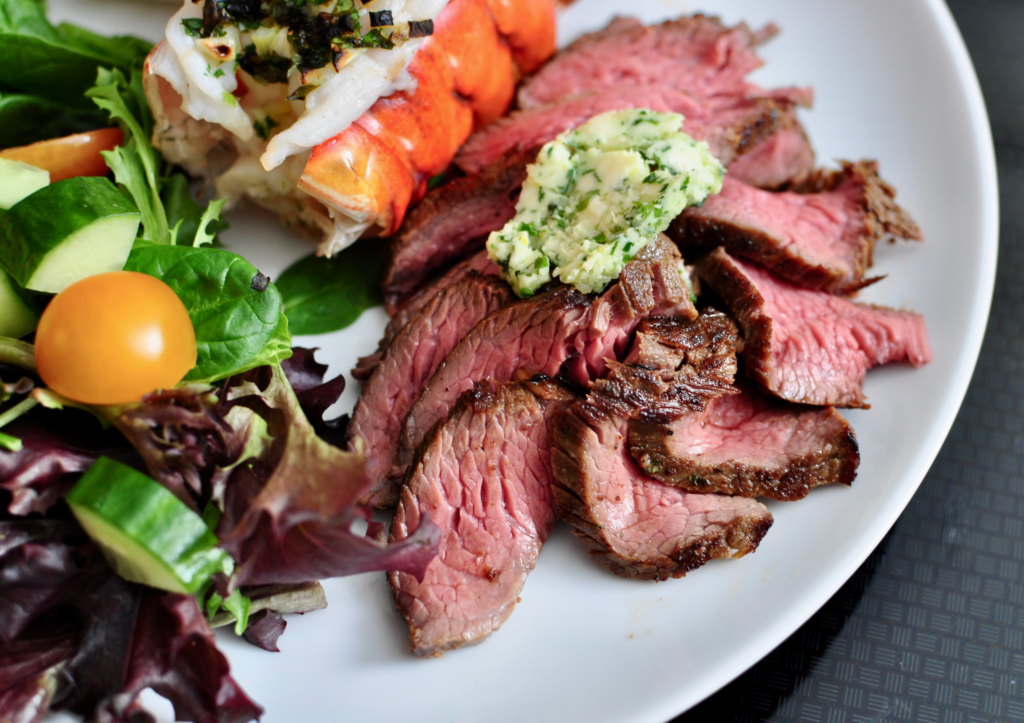
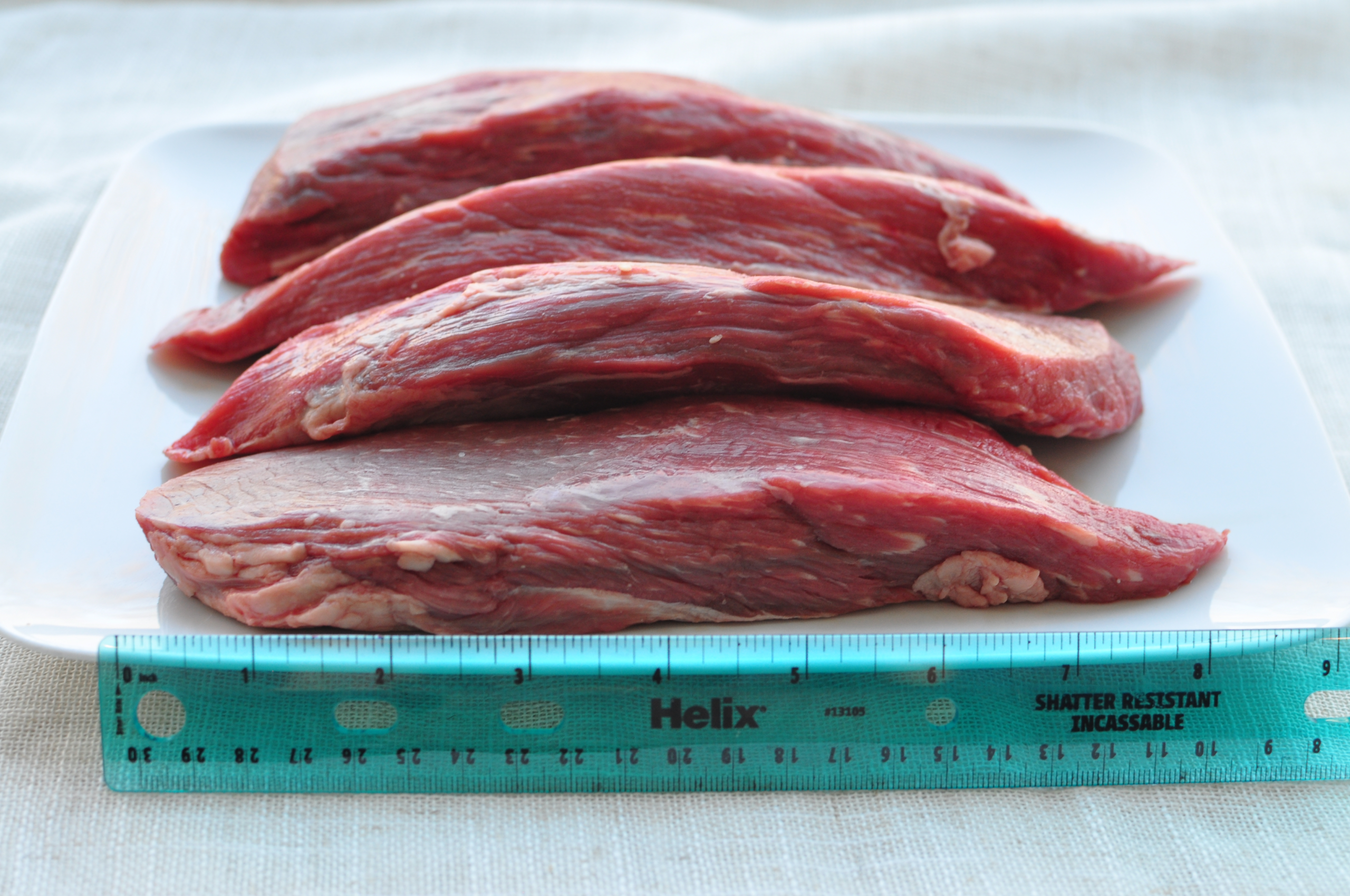
Petite Filet, also known as Petite Tender, Bistro Filet, or Shoulder Petite Tender, is a small lean cut from the shoulder of the cow, called Teres Major. If you are a fan of filet mignon, the petite filet is a miniature version of this tenderloin at about half the price per pound. It’s usually around 9 inches long and about 3 inches wide in the middle. I say middle because the ends of this cut tapers. It’s meaty, lean and tender when cooked medium rare. I hear this cut gets tough when cooked medium or higher, but I would never know because I would never take a steak to medium or beyond.
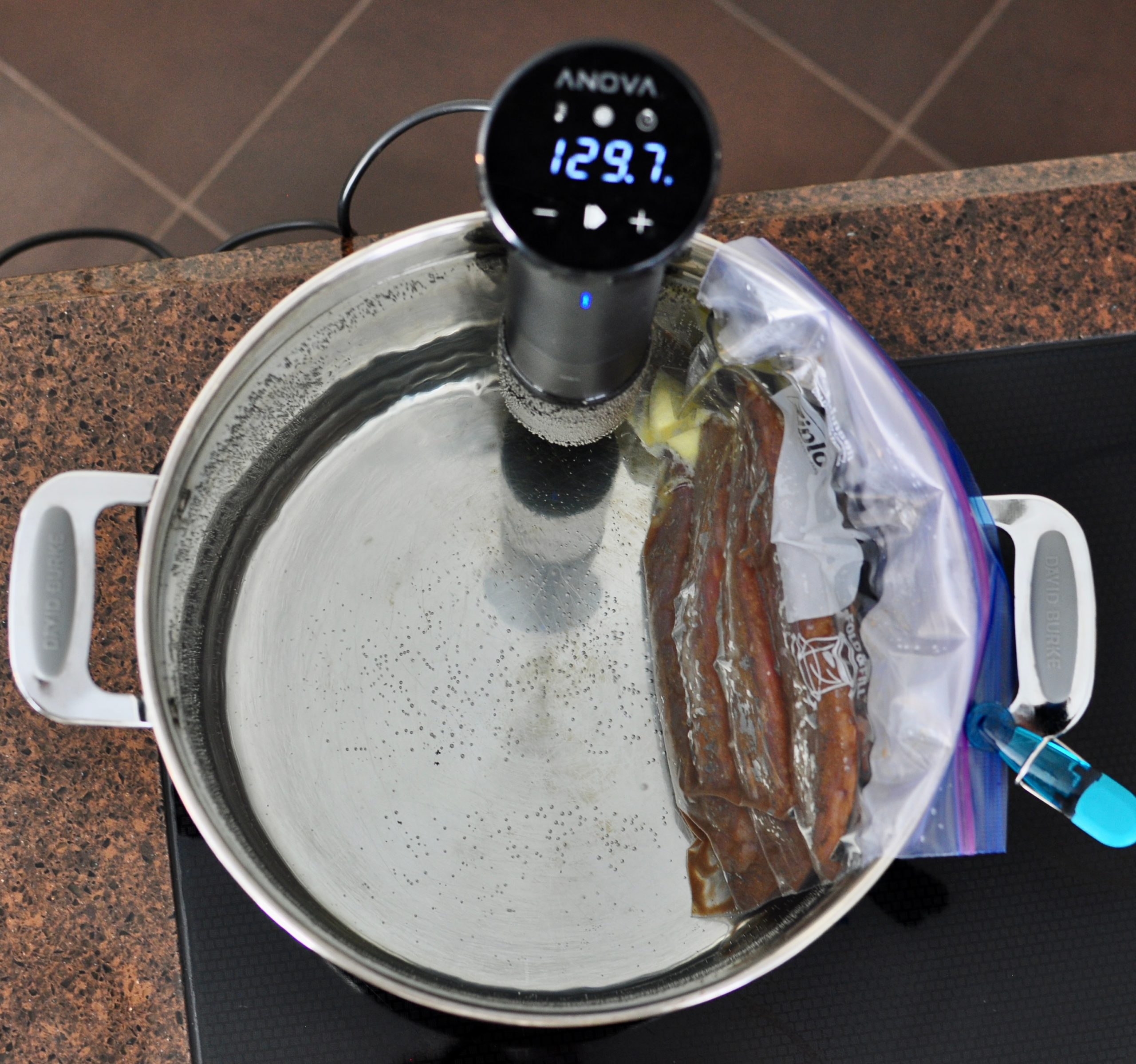
Because of the odd shape, the best way to cook this beef is sous vide and then a quick sear. Two hours at 129°F will give you a perfect medium rare throughout the entire cut, from the middle of this tender, to the end parts. If you don’t have a sous vide, this cut can also be cooked in the oven using the reverse sear method. See my notes below for instructions for oven cooking the petite filet.
Back to sous vide, I marinate with my usual suspects, including my secret ingredient- soy sauce! Each petite filet is approximately 3/4 pound each, so it makes a good portion for 1 serving. Plan to cook 1 filet for each person. Finished with a quick cast iron sear and a decadent butter baste, these steaks deliver that iconic steakhouse crust without the risk of overcooking the center. Whether you prefer your steak rare or medium-rare, this sous vide tenderloin recipe is the most reliable way to serve a restaurant-quality meal at home.
Why Sous Vide Petite Filet?
- Precision Doneness: No more grey bands—just a consistent pink center from one side to the other.
- Budget-Friendly Luxury: Petite filets offer the same tenderness as center-cut filet mignon but are often more accessible for weeknight dinners.
- Stress-Free Entertaining: Since the steak can stay in the water bath for up to 4 hours without overcooking, it’s the perfect main dish for hosting guests.
Unlike a ribeye or NY strip, the petite filet tapers significantly at both ends. That shape is beautiful on a plate — but it’s a challenge in a hot pan or on a grill, where the narrow ends cook much faster than the center. Sous vide eliminates that problem entirely. The water bath surrounds the entire steak at a precise, consistent temperature, so every millimeter of that filet — wide center, narrow tip, and everything in between — reaches exactly the doneness you choose. No guessing. No cutting it open to check. No stress.
A Simple, Bold Seasoning That Lets the Beef Shine
The marinade here is intentionally unfussy: soy sauce for a deep, umami-rich base, salt to amplify the beef’s natural flavor, and garlic and onion granules for a savory, aromatic backbone. It’s a short list, but every ingredient is doing real work. The soy sauce also helps develop a gorgeous crust during the final sear.
The Sear: One Minute Per Side and Done
After the sous vide bath, the steak goes straight into a ripping hot pan for just one minute on each side. That’s all it takes to build a deeply caramelized, flavorful crust without pushing the internal temperature past your target. This two-step process — low and slow, then fast and fierce — is what makes this recipe so reliable and so satisfying.
Cook It Your Way
One of the great joys of sous vide is that doneness is entirely yours to control. Set the water bath to 129°F for medium rare, 140°F for medium, or adjust to your personal preference. The petite filet will hold that temperature perfectly through the entire cook, no matter how tapered the cut is.
You might also like…

Spinach Meatballs
Say goodbye to mushy, falling-apart meatballs! These broiled spinach meatballs are loaded with ground beef, zucchini, parmesan, and a generous helping of spinach — then seared under the broiler for a deep, earthy crust. They’re tender enough to melt in your mouth and sturdy enough to simmer in tomato sauce without losing their shape.

Steak
Think you know steak? Think again. This grilled steak recipe uses a surprising but genius trick — a splash of low-sodium soy sauce — to create insane umami depth and a butter-tender bite. You won’t taste soy sauce. You’ll just taste the best steak you’ve ever had. Finished on a hot BBQ grill for those gorgeous sear marks and smoky flavor, this one’s about to become your forever go-to.
Visual Step-by-Step Guide for Making Sous Vide Petite Filet:


What’s in this petite filet steak
- petite filets
- soy sauce
- salt
- garlic granules
- onion granules

Sous Vide Petite Filet

A petite filet is a small, tender cut of beef from the shoulder/chuck region, often referred to as Teres Major. It is shaped like a tenderloin, is known for its tenderness, and priced about half of what a tenderloin sells for per pound. Each petite filet generally weighs about 12 to 15 ounces each and is best cooked the same way a regular tenderloin is cooked- quickly over high heat, grilling, searing or roasted. Because of the petite filet’s ends are tapered, they tend to cook faster than the center, where the steak is thicker. The best way to cook this cut of beef is sous vide and reverse sear. I’ll go over the sous vide method here. If you would like to reverse sear this in the oven, check out my reverse sear version here.
- Prep Time: 20 minutes (including 15 minute marinade)
- Cook Time: 2 hours 4 minutes
- Total Time: 2 hours 34 minutes
- Yield: 4 servings 1x
- Category: Dinner
- Method: Sous Vide
- Cuisine: American
- Diet: Low-Carb
Ingredients
Steak and Marinade
- 2 petite filets (about 1 1/2 to 2 pounds)
- 3 tablespoons low sodium soy sauce
- 1 tablespoon salt
- 1 tablespoon garlic granules
- 1 tablespoon onion granules
- 2 tablespoons butter
For the sear
- 3 tablespoons butter
- 3 sprigs thyme
- 3 cloves garlic, smashed
Instructions
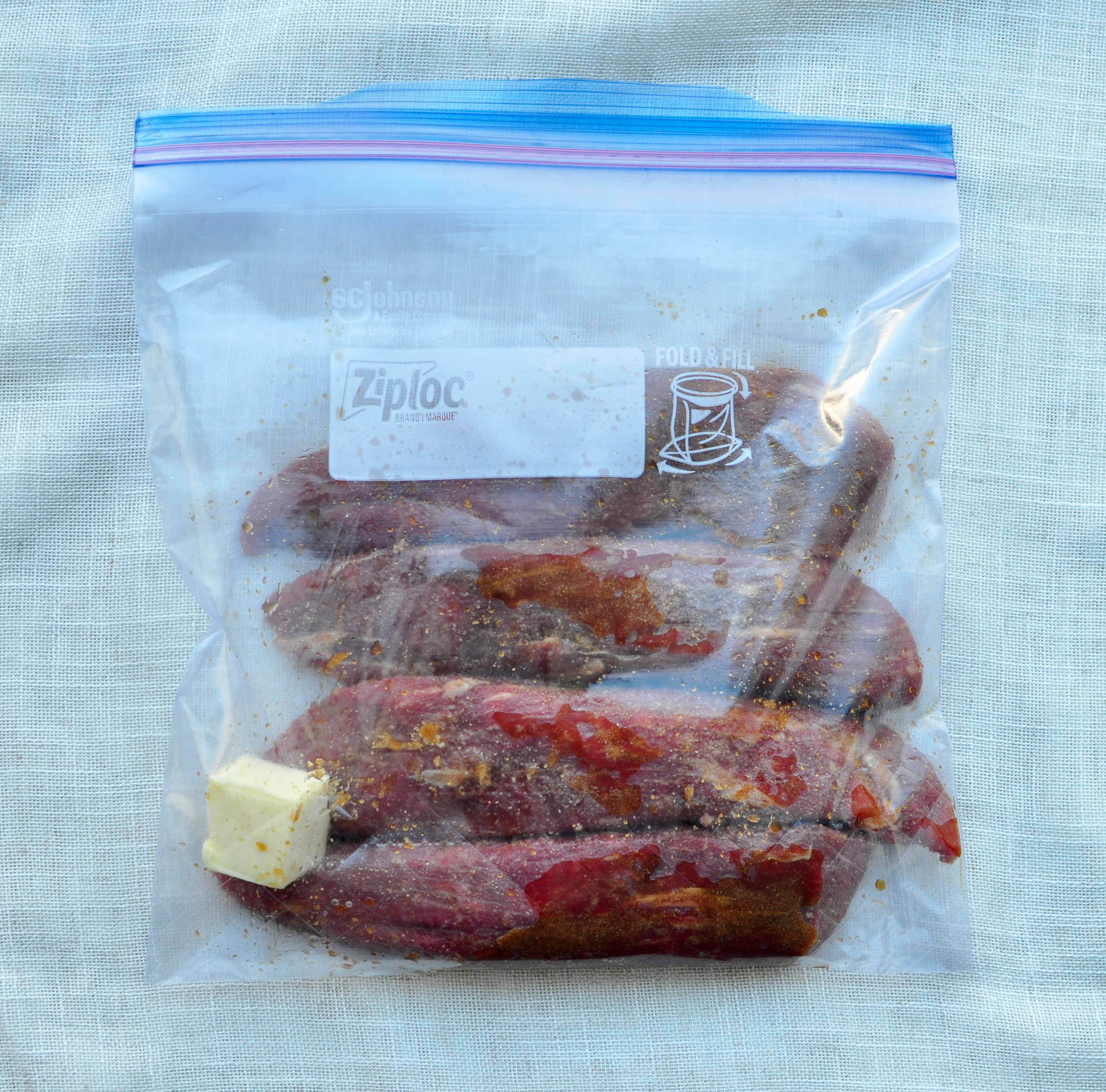
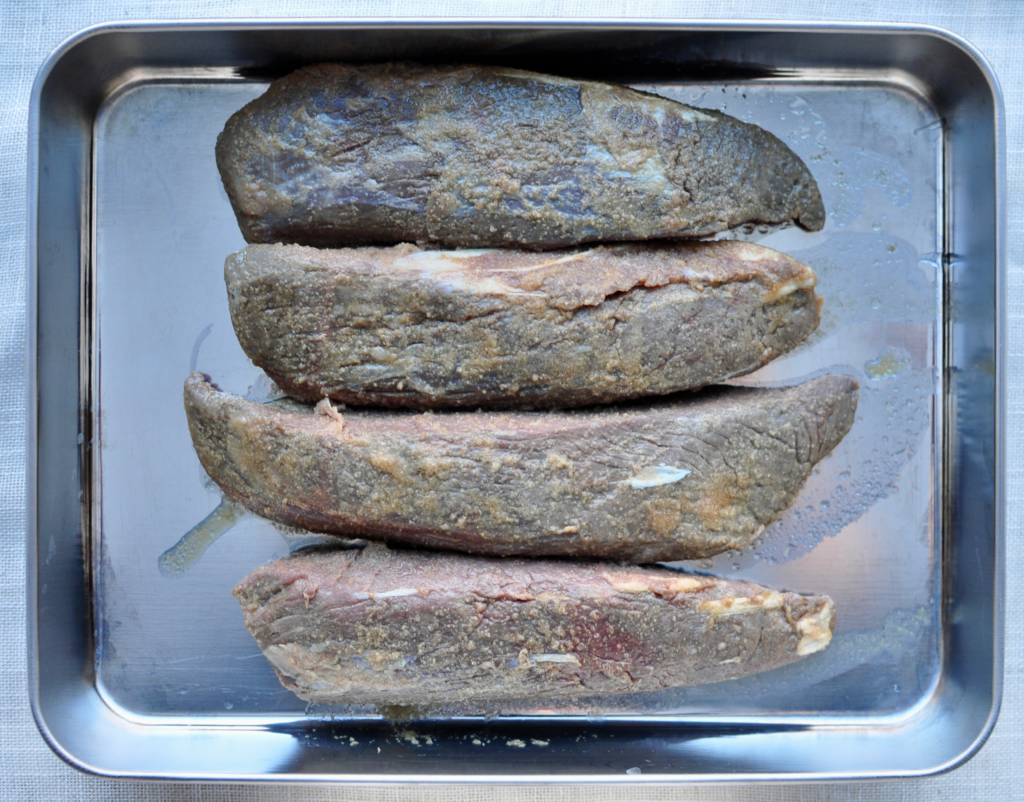
- Place the petite filets on a shallow pan and drizzle the soy sauce over the filets. Turn the steaks around in the pool of soy sauce to make sure there is a light coating of soy sauce on the entire surface of the beef. Always drizzle the the soy first before the dry seasons so that the soy sauce doesn’t wash away any of the seasonings.
- Now with the filet evenly coated throughout its surface with soy sauce, sprinkle the salt, garlic and onion granules around the filets. The dry seasonings should adhere well.
- Place the steaks in a sous vide bag or freezer zip lock bag. Let the steak sit at room temperature for 15 minutes while it marinates. Preheat your sous vide water to 129°F for medium rare. See chart below for other temperatures. Immerse the bag into the water and let any air out of the bag if using a zip lock bag.
- After 2 hours, remove the bag from the water. Take the filets out of the bag and place on a baking sheet to let the beef air dry.
- Preheat your cast iron or pan on high. Once your pan is smoking hot, sear your steaks for 1 minute. Do not touch it. After 1 minute, rotate the filets a quarter turn each. Add the butter to the pan and toss in the garlic and thyme on top of the butter. Allow a few seconds for the aromatics to blossom. Tilt you pan in a circular motion so that the butter travels across and around the pan. After searing the 2nd side for 1 minute, rotate the filets another quarter turn. Spoon the butter over the filets to baste the steaks. After 1 minute, turn the filets another quarter turn. This is the last side for a total sear time of 4 minutes, basting frequently.
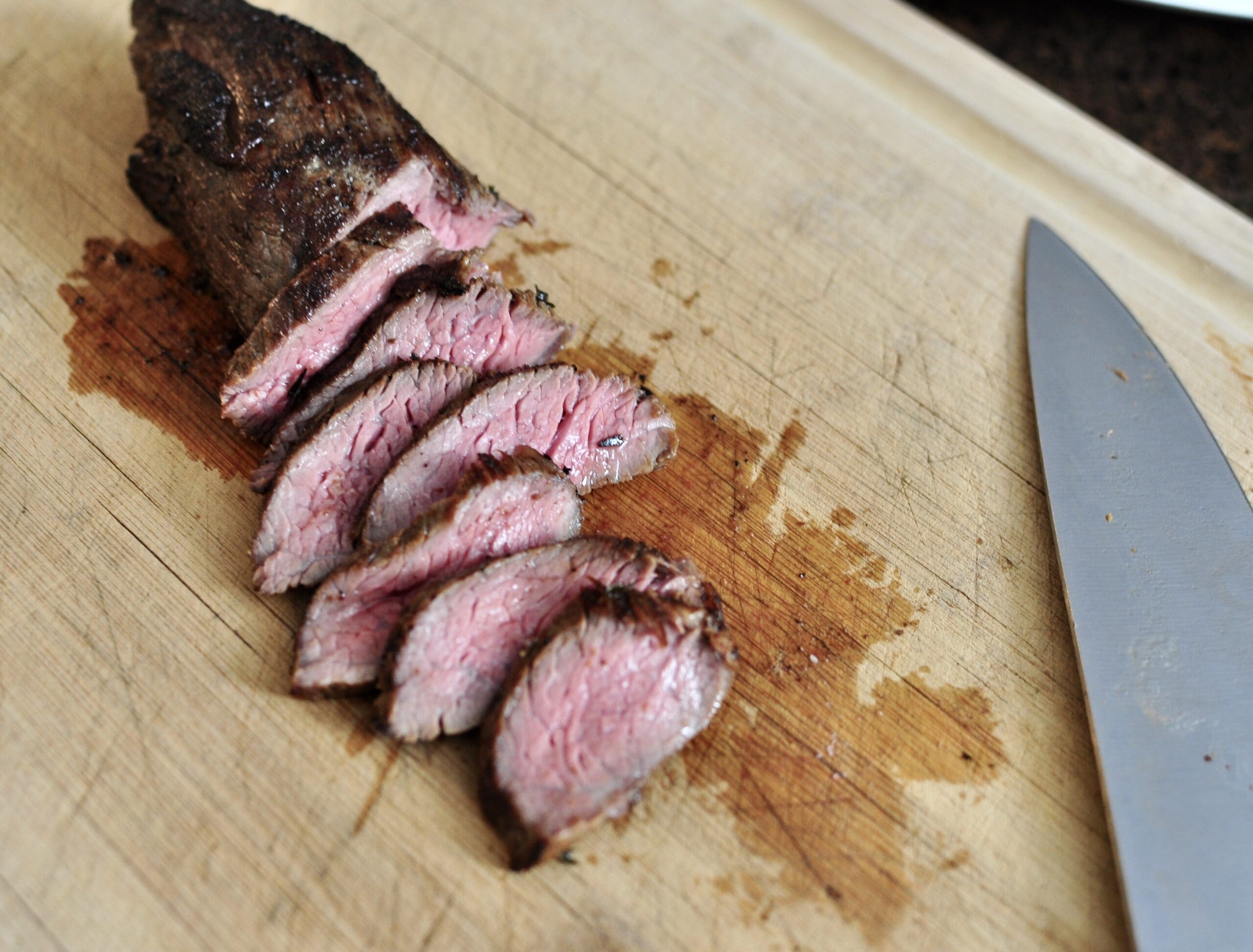
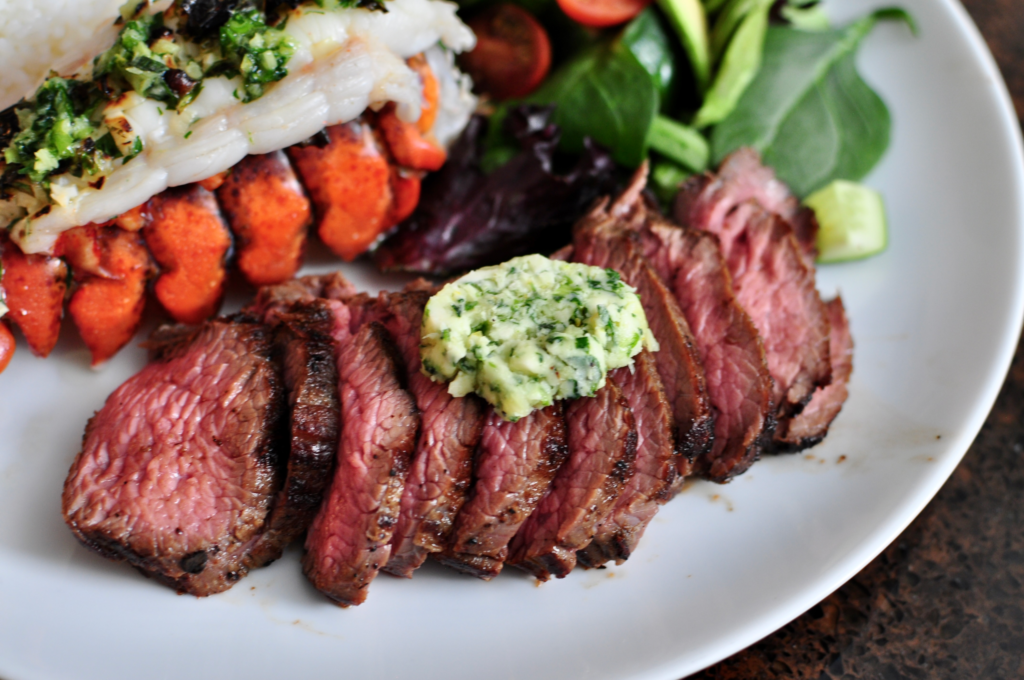
- Remove the steak from the pan onto a plate. Pour any remaining butter over the steak. Let it sit for 10 minutes. Slice and serve.
Nutrition
- Serving Size: 12 ounces
- Calories: 360 kcal
- Sugar: 0.5 g
- Sodium: 2300 mg
- Fat: 19 g
- Saturated Fat: 9.7 g
- Unsaturated Fat: 7.5 g
- Trans Fat: 0.6 g
- Carbohydrates: 4 g
- Fiber: 0.4 g
- Protein: 40 g
- Cholesterol: 137 mg
❓ FAQ’s for Sous Vide Petite Filet Steak
The petite filet (also called the shoulder petite tender or teres major) is a small, lean, and tender cut of beef. It has a tapered shape with narrow ends, making it ideal for sous vide cooking where consistent heat ensures even doneness throughout. It most resembles a tenderloin in taste and texture.
For medium rare, set your sous vide to 129–131°F (54–55°C). For rare, aim for around 125°F, and for medium, go up to about 135°F. Cook for 1 to 2 hours for the best texture.
Generally 1 to 2 hours works well for a petite filet. Because it’s a relatively thin and tender cut, there’s no need for an extended cook time like you’d use for a tough roast.
Soy sauce adds a rich umami depth that enhances the beef’s natural flavor without overpowering it. It also helps create a better sear and crust when the steak hits the hot pan, thanks to its natural sugars and salts.
This specific recipe is built around the sous vide method, which is especially important for the petite filet’s tapered shape. That said, a reverse sear method (oven low and slow, then pan sear) can be a reasonable alternative.
Absolutely. The steak is fully cooked when it comes out of the sous vide bag. The sear is purely for texture and flavor (the Maillard reaction). Make sure your pan is smoking hot so you can get a great crust in just 60 seconds per side without overcooking the inside!
Yes! Always pat the steak dry with a paper towel after removing it from the sous vide bag. Moisture is the enemy of a good sear — a dry surface means a better, faster crust in that one-minute window.
Absolutely. Sous vide is actually one of the most beginner-friendly cooking methods because the machine does the precise work for you. If you can set a temperature and a timer, you can nail this recipe.
Absolutely. You can sous vide the steak in advance, then chill it and give it a quick sear right before serving—perfect for entertaining.
SHOP FOR THIS RECIPE


 Strawberry Mochi Squares
 Easy Blanched Shanghai Bok Choy
 Strawberry Chia Seed Jam
 Matcha Mochi Squares
 Pan-Seared Oven-Finished Duck Breasts
 Counter Culture: What to Keep Out of Your Fridge
 Banana Protein Muffins
 Blueberry Chia Seed Jam
 Chocolate Cupcakes
 Vanilla Cupcakes
